





 Home
HomeDate: 2026-06-29
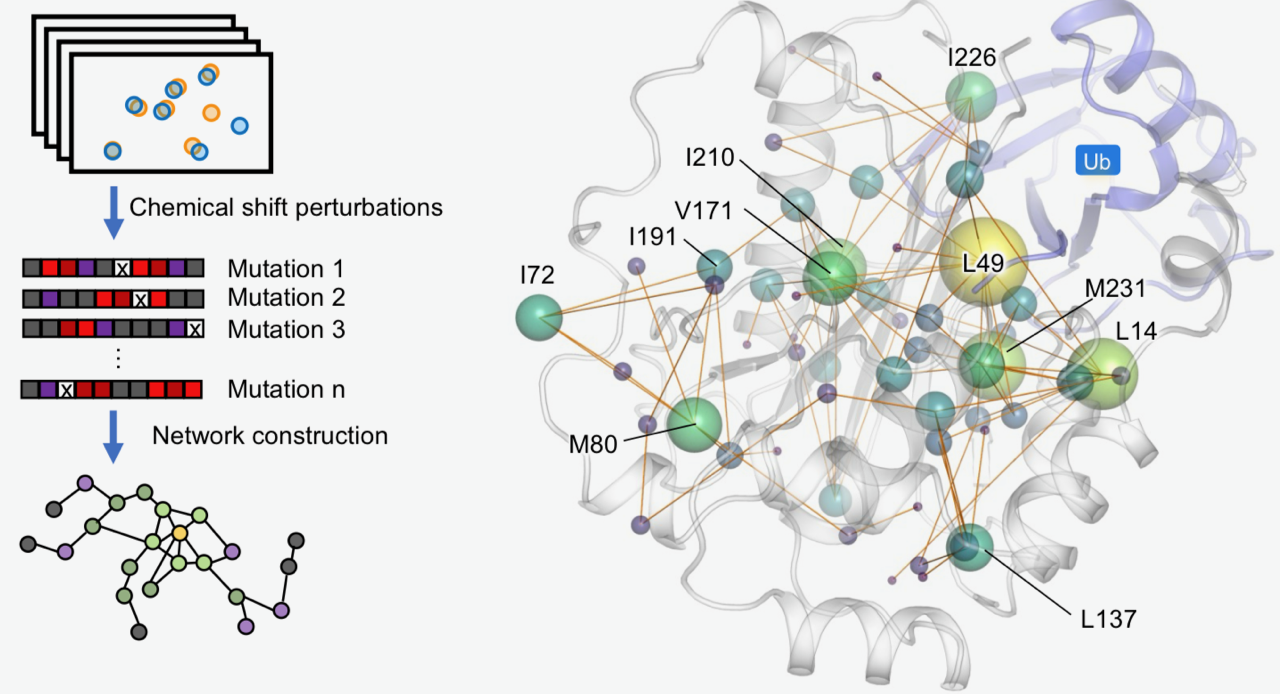
A research team led by Professor Shang-Te Danny Hsu at the Institute of Biological Chemistry, Academia Sinica, combined advanced methyl NMR, protein dynamics analysis, and molecular simulations to map, for the first time, the long-range allosteric regulatory network inside the important tumor suppressor protein BAP1 and to systematically examine the molecular effects of nearly 50 cancer-related mutations. BAP1 is closely linked to several cancers, including mesothelioma, uveal melanoma, and renal cell carcinoma, and its core structure has a rare deeply knotted fold. The team found that an amino acid in the protein core, L49, acts as a key hub for coordinating internal communication. Even a mutation that shortens its side chain by just one carbon atom can disrupt the dynamic coupling between different parts of the protein, causing its deubiquitinase activity to be lost. Further analysis showed that many cancer mutations found in patients are far from the active site, yet they can still affect protein stability and function by disturbing this regulatory network. This study provides one of the most comprehensive structure-function maps of BAP1 cancer mutations to date, offering an important molecular basis for understanding how BAP1-related cancers develop and highlighting the unique power of advanced NMR techniques for revealing protein dynamics and disease mechanisms.
This study was supported by Academia Sinica and the NSTC. Technical support was provided by the Academia Sinica High-field NMR Center, the Academia Sinica Biophysics Core Facility, the Biophysics Core Facility of the IBC, Academia Sinica, and the Small-angle X-ray Scattering Beamline at the NSRRC. The findings were published in Nature Communications on 26 May 2026.
-
Link