


跳到主要內容區塊
Close
:::
Open
5/11/2026 7:34:26 PM
  1. Home_picHome
  2. > Research

Research Findings

:::

Academia Sinica highly values academic freedom and freedom of speech and encourages our colleagues to provide opinions on and propose solutions to key social issues. Nonetheless, research findings and opinions expressed independently by our colleagues do not necessarily reflect the official position of Academia Sinica. We expect all colleagues to adhere to academic norms and take responsibility by citing sources and ensuring accuracy when publishing independently. Research findings and opinions provided on behalf of Academia Sinica should be published according to established procedures.

2024-04-26
  • Research Findings
  • Institute of Molecular Biology
Unraveling how a predatory fungus sense its nematode prey

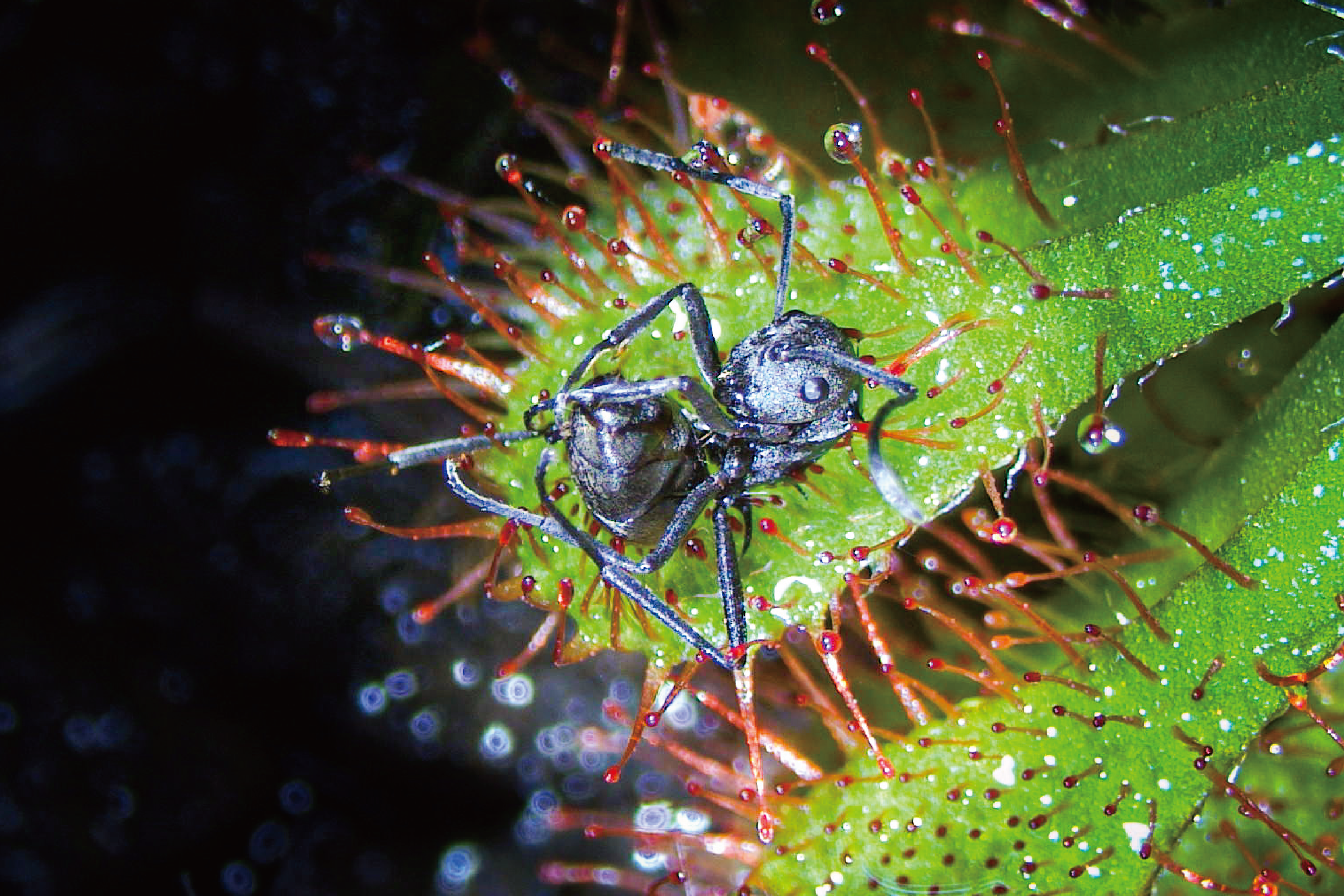
The capability to sense and respond to the environment is essential for survival and fitness in all organisms. Recent studies have shown organisms from different kingdoms, such as fungi, plants, and mammals can recognize and respond to conserved nematode pheromones, named ascarosides. However, the mechanisms underlying cross kingdom perception of nematode pheromones remain unclear. A research team led by Dr. Yen-Ping Hsueh at the Institute of Molecular Biology, Academia Sinica, revealed that two families of GPCRs are responsible for ascarosides detection, leading to the activation of the cAMP-PKA pathway for trap development in nematode-trapping fungus Arthrobotrys oligospora. The expansion of GPCRs in A. oligospora may have been advantageous for recognizing diverse nematode-derived signals to ensure robust prey recognition during co-evolution. Moreover, the identification of ascarosides receptors in a fungal species sheds light on the molecular mechanisms of ascaroside-mediated cross-kingdom communication. This research has been published on April 22, 2024 in Nature Microbiology. The lead author of this research, Chih-Yen Kuo, is a TIGP-MCB student at Academia Sinica, and collaborators of this research includes Dr. Frank Schroeder at Cornell University and Dr. Yu-Chu Chang at Taipei Medical University. Funding was provided by Academia Sinica and the National Science and Technology Council.

  • :
  • /483
回頂端