



 Home
Date: 2026-09-11
Academia Sinica President Chien-Jen Chen received Dr. Daniel Jaffe, President of the Giant Magellan Telescope Organization (GMTO), on September 10. The two sides discussed Taiwan’s participation in major international astronomy projects, progress on the Giant Magellan Telescope (GMT), and opportunities for future research collaboration and talent development. President Chen noted that astronomical research requires sustained investment and international collaboration, with major observational facilities providing essential infrastructure for cutting-edge astronomical research. He expressed hope that Academia Sinica would deepen its collaboration with GMTO and other international partners in astronomy, leveraging Taiwan’s strengths in astronomical research, instrumentation, and the technology sector to expand opportunities for advanced astronomical research and talent development.
Academia Sinica’s Institute of Astronomy and Astrophysics (ASIAA) has long been involved in major international astronomy projects, gaining extensive collaborative experience through initiatives such as the Atacama Large Millimeter/submillimeter Array (ALMA). With support from Taiwan’s National Science and Technology Council, ASIAA formally joined the GMT project in 2024 as a founding member. GMT is one of two next-generation extremely large telescopes currently under construction and is being developed by 16 research institutions from the Australia, Brazil, Chile, Israel, South Korea, Taiwan and United States. Now under construction at Las Campanas Observatory in Chile, the telescope will consist of seven 8.4-meter primary mirror segments, forming an effective aperture of approximately 25 meters. With its innovative design and advanced scientific instruments, GMT will help scientists address fundamental questions such as the evolution of galaxies in the early universe, the growth of supermassive black holes, the searchof habitable exoplanets, and the search for extraterrestrial life.
Dr. Jaffe is a professor in the Department of Astronomy at the University of Texas at Austin. His research focuses on astronomical instrumentation and the formation and evolution of stars and planetary systems. He noted that ASIAA has strong expertise in radio astronomy and the development of optical and infrared instrumentation, supported by outstanding engineering and research talent. ASIAA is currently participating in the development of two instruments for GMT. Before GMT is completed, the instruments are expected to be installed on smaller telescopes, allowing the teams to begin observations and gain experience in data analysis before GMT becomes operational.
ASIAA Research Fellow Shiang-Yu Wang said that participation in the GMT project enables the Institute not only to contribute to the design, construction, and testing of observational instruments, but also to work with international science teams in shaping research priorities. Through this collaboration, Taiwan will gain access to next-generation telescopes while also cultivating the next generation of astronomers and technicians.
The two sides also discussed opportunities for student and postdoctoral exchanges as a way to build a long-term collaborative network. The expertise developed at ASIAA in instrumentation, data analysis, and complex problem-solving can also be applied to fields such as artificial intelligence, information science, and semiconductor manufacturing. Academia Sinica also shared its talent development initiatives, including the Taiwan International Graduate Program (TIGP), to support greater exchange of students and researchers between the two institutions.
Academia Sinica participants in the meeting included President Chien-Jen Chen, Vice President Yu-Ju Chen, ASIAA Research Fellow Shiang-Yu Wang, and Tzu-Ching Meng, Director of the Department of International Affairs. On the same day, Dr. Jaffe delivered a talk at ASIAA entitled “Giant Magellan Telescope: Status and Promise,” introducing GMT’s scientific goals and observational capabilities and sharing updates on its construction, recent milestones, and future plans.
-
Ms. Tsuey-Yin Piong, Media & Public Affairs, Secretariat, Academia Sinica
(02) 2789-8821,fangzi@as.edu.tw
-
Ms. Yi-ling Lee, Media & Public Affairs, Secretariat, Academia Sinica
(02) 2789-8820,cvcc54@as.edu.tw
-
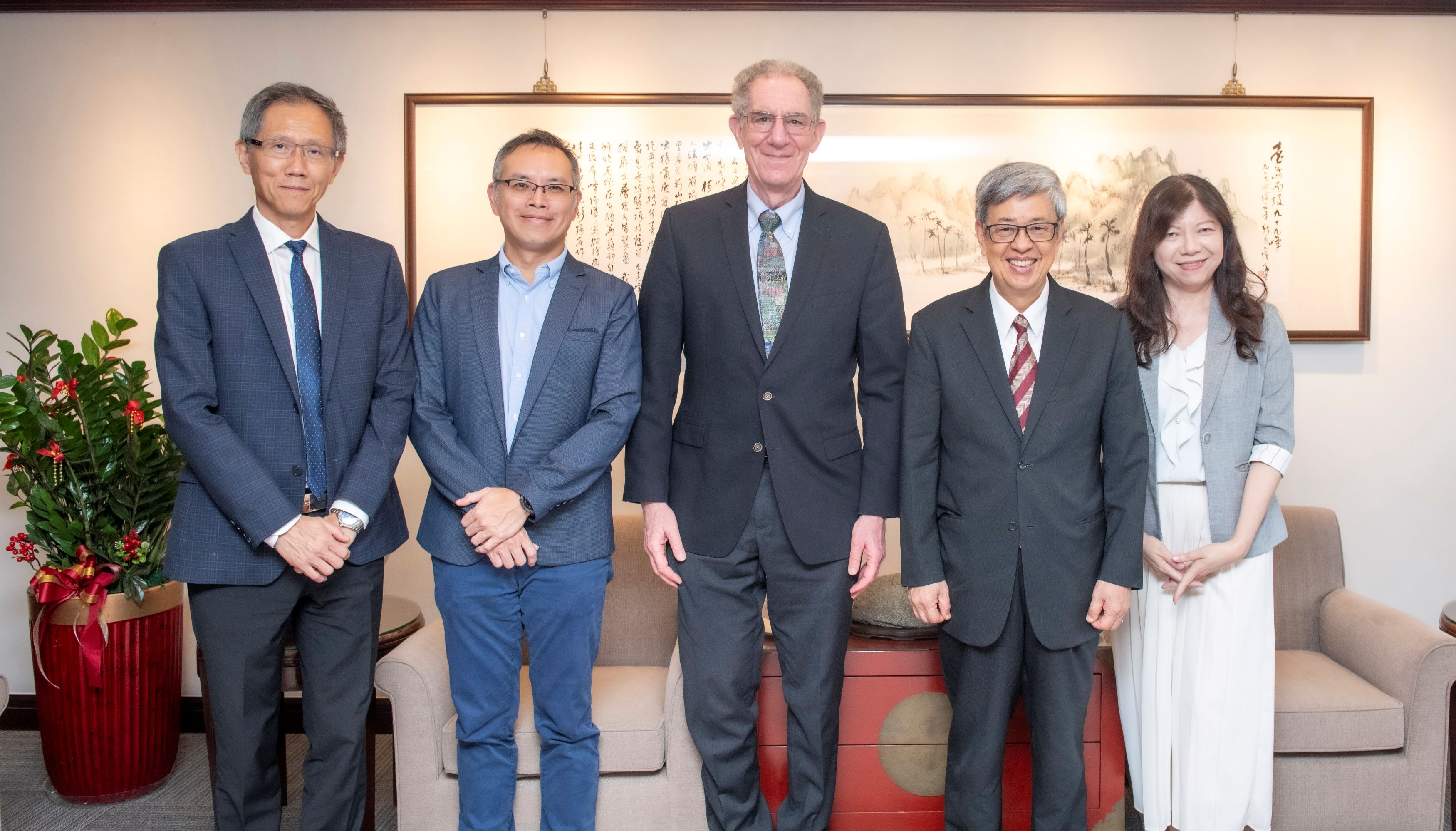 From right: Academia Sinica Vice President Yu-Ju Chen; President Chien-Jen Chen; Daniel Jaffe, President of the Giant Magellan Telescope Organization; Shiang-Yu Wang, Research Fellow at the Institute of Astronomy and Astrophysics, Academia Sinica; and Director of the Department of International Affairs Tzu-Ching Meng. Photo credit: Academia Sinica.

-
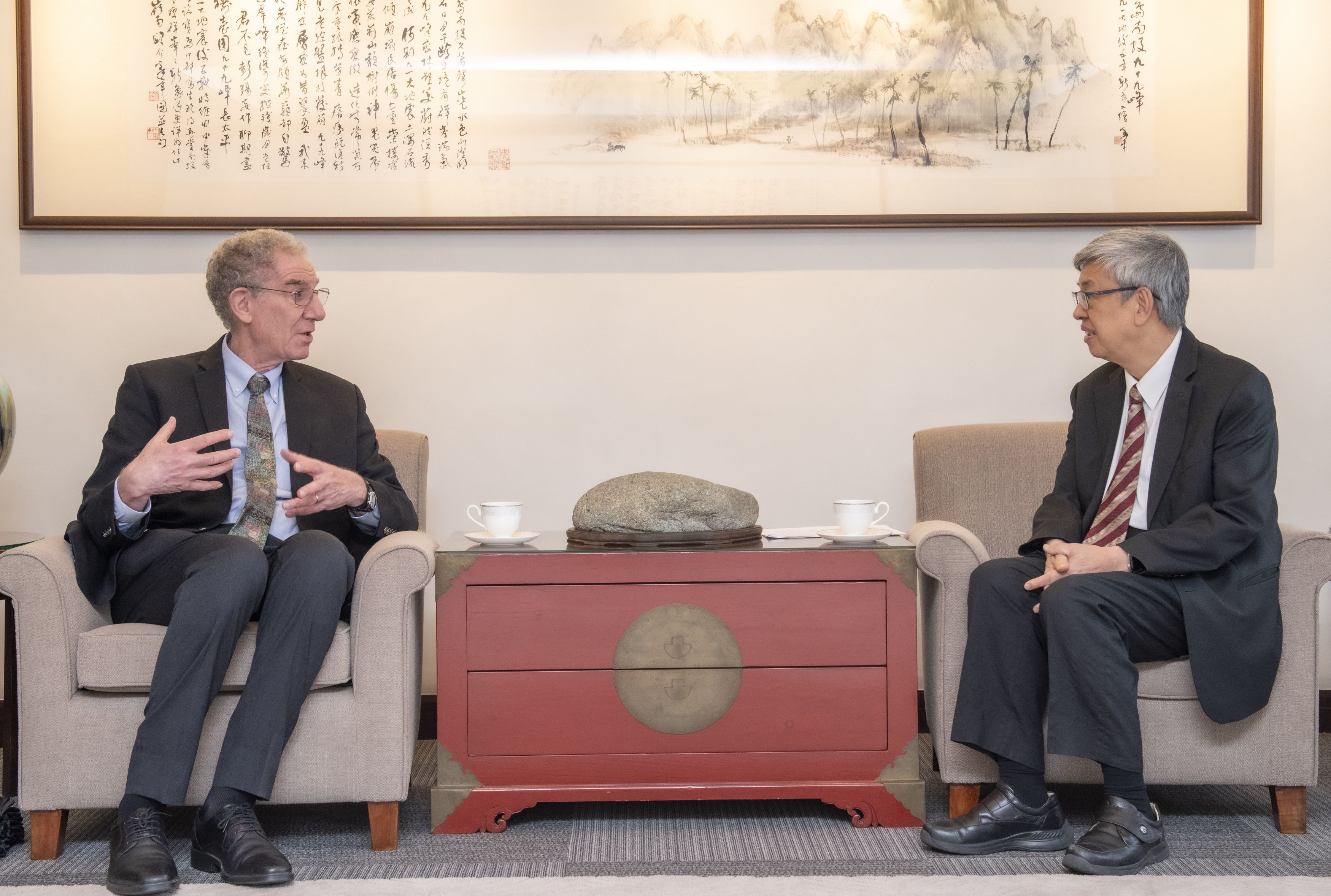 Academia Sinica President Chien-Jen Chen (right) speaks with Daniel Jaffe, President of the Giant Magellan Telescope Organization. Photo credit: Academia Sinica.
-
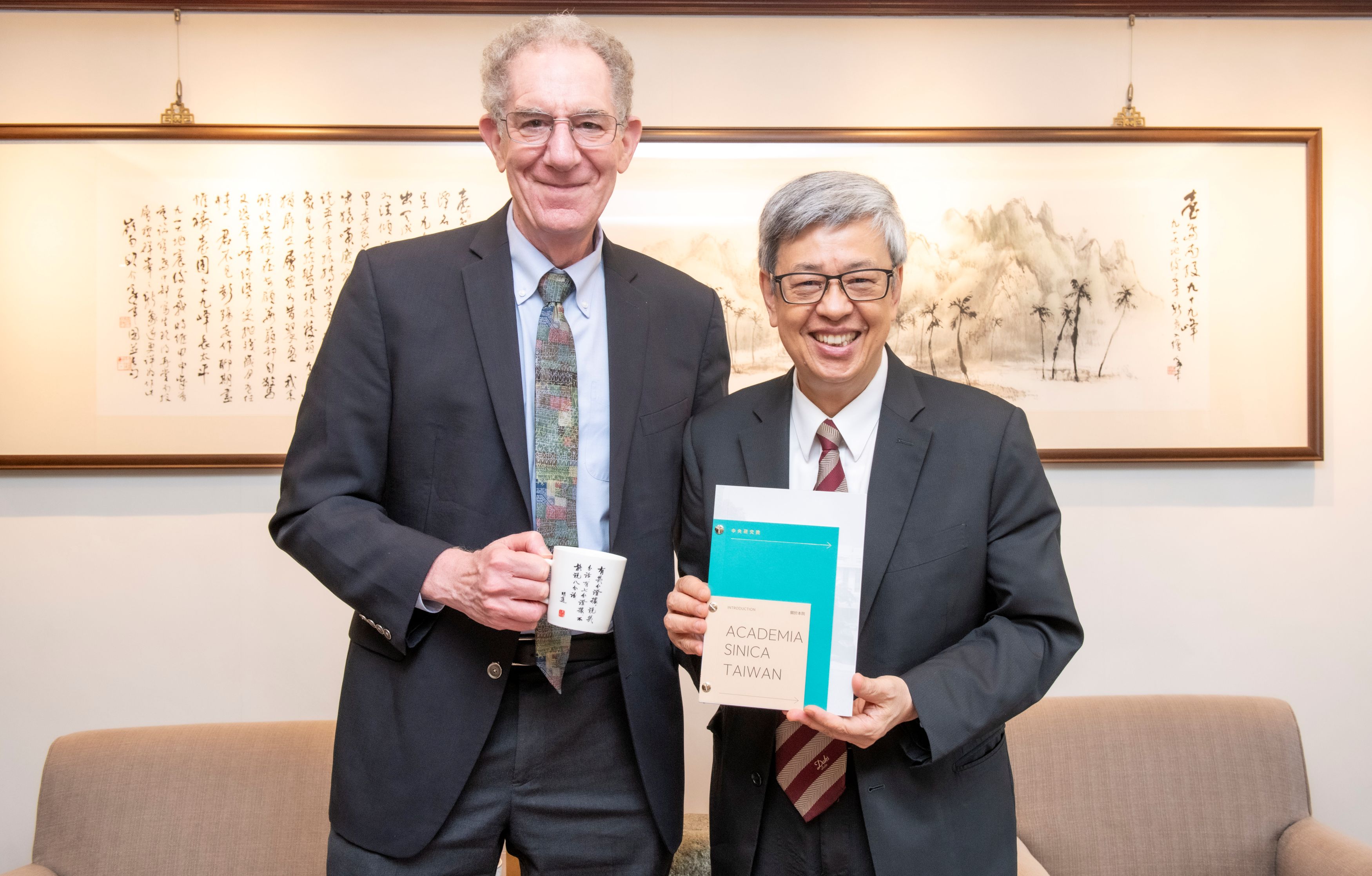 Academia Sinica President Chien-Jen Chen presents a commemorative gift to Daniel Jaffe, President of the Giant Magellan Telescope Organization. Photo credit: Academia Sinica.
-
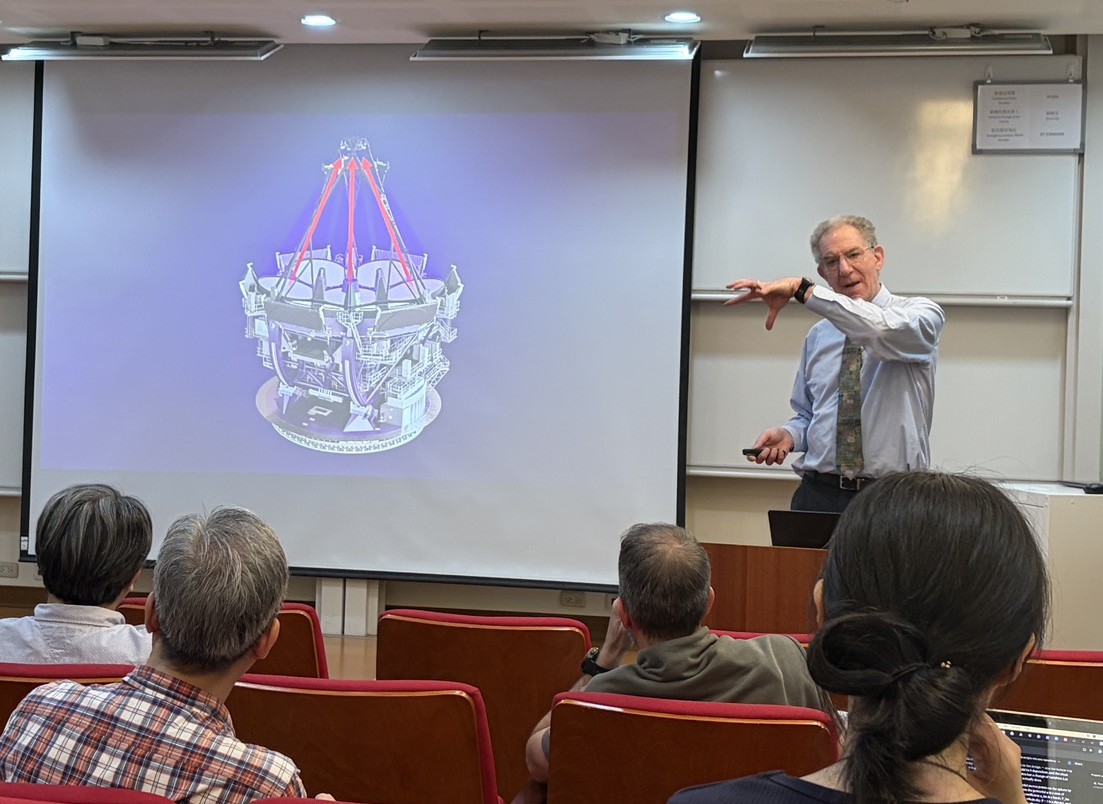 Daniel Jaffe, President of the Giant Magellan Telescope Organization, delivers a speech. Photo credit: Academia Sinica.