



 Home
HomeDate: 2026-08-18
Academia Sinica President Chien-Jen Chen met with a delegation from China Medical University (CMU), led by Chairman Chang-Hai Tsai, on August 17. The two sides held in-depth discussions on a range of research areas, including connectomics and NeuroAI, the deqi sensation in acupuncture and its therapeutic effects on sng (acid- or soreness-like discomfort) and pain, mitochondria-targeted therapies, next-generation precision oncology and cancer immunotherapies, genomic medicine, and multi-omics research for human health. They also discussed potential directions for future inter-institutional collaboration.
President Chen noted that Academia Sinica is actively expanding its partnerships with universities across Taiwan, and that CMU has established a strong foundation in medical research, talent development, and social responsibility. As clinical validation is essential to translating fundamental biomedical discoveries into real-world applications, he expressed hope that the two institutions would focus on promising areas that draw on their complementary strengths, pool research talent and resources, and jointly pursue larger-scale research initiatives. Such efforts, he said, could expand collaboration from individual researcher-to-researcher exchanges to team-to-team and ultimately institution-to-institution partnerships, laying the groundwork for a long-term research partnership with international impact.
Connecting Research Strengths in Frontier Biomedical Fields
Chairman Tsai noted that CMU has maintained close academic ties with Academia Sinica over the years, with a number of Academia Sinica researchers and Academicians currently contributing to CMU’s research and teaching. By bringing together research teams from diverse fields, he hoped to further connect the research strengths of the two institutions and jointly advance frontier research.
In brain science, CMU President and Academia Sinica Academician Ann-Shyn Chiang shared recent advances in connectomics and spatial imaging technologies. He explained that AI and high-resolution imaging are expanding our understanding of brain structure and function, opening new opportunities to combine neuroscience and AI to investigate important questions related to memory and brain disorders. Academician Jaung-Geng Lin discussed research on the relationship between the deqi sensation in acupuncture and the mechanisms underlying sng sensation (sngception). He is currently collaborating with Chih-Cheng Chen, Distinguished Research Fellow at Academia Sinica’s Institute of Biomedical Sciences, to investigate the relationship between acupuncture deqi and sngception using modern neuroscience approaches. They aim to re-evaluate the therapeutic effects of deqi in treating various forms of sng and pain.
Participants also exchanged views on mitochondria research, precision oncology, cancer immunotherapy, and healthy aging. Discussions explored how multi-omics approaches, including proteomics and metabolomics, could be integrated to investigate the relationships among mitochondrial function, aging, and disease. They also considered opportunities to bridge fundamental mechanistic research with clinical applications in areas such as cancer, immune regulation, and neurodegenerative diseases.
Combining Fundamental Research and Clinical Strengths to Build Globally Competitive Partnerships
Academia Sinica Vice President Yu-Ju Chen highlighted Academia Sinica’s strengths in fundamental research and technology development in areas including data science and AI, structural biology, and multi-omics, while CMU brings extensive clinical resources and experience in translational research and commercialization. These complementary capabilities, she said, provide a strong foundation for deeper collaboration.
Through major initiatives such as the Taiwan Biobank, the Taiwan Precision Medicine Initiative (TPMI), the REVEAL cohort study, and the Taiwan Cancer Moonshot Project, Academia Sinica has accumulated extensive omics and clinically relevant datasets over many years. Integrating these resources with clinical validation could further unlock the research potential of large-scale datasets. Vice President Chen expressed hope that the two institutions could combine their respective strengths in technology, data, research talent, and clinical resources to pursue research breakthroughs with global impact.
Academia Sinica participants included President Chien-Jen Chen; Vice President Yu-Ju Chen; Chih-Cheng Chen, Distinguished Research Fellow at the Institute of Biomedical Sciences; and Lie-Fen Shyur, Distinguished Research Fellow at the Agricultural Biotechnology Research Center. The CMU delegation included Chairman Chang-Hai Tsai; Board Member and Academician Jaung-Geng Lin; President and Academician Ann-Shyn Chiang; Vice President Fuu-Jen Tsai; Distinguished Chair Professor and Academician Mien-Chie Hung; Academician Lu-Hai Wang; and Der-Yang Cho, Superintendent of China Medical University Hospital.
-
Ms. Tsuey-Yin Piong, Media & Public Affairs, Secretariat, Academia Sinica
(02) 2789-8821,fangzi@as.edu.tw
-
Ms. Steffi Tung Lin, Media & Public Affairs, Secretariat, Academia Sinica
(02) 2789-8820,tunglin@as.edu.tw
-
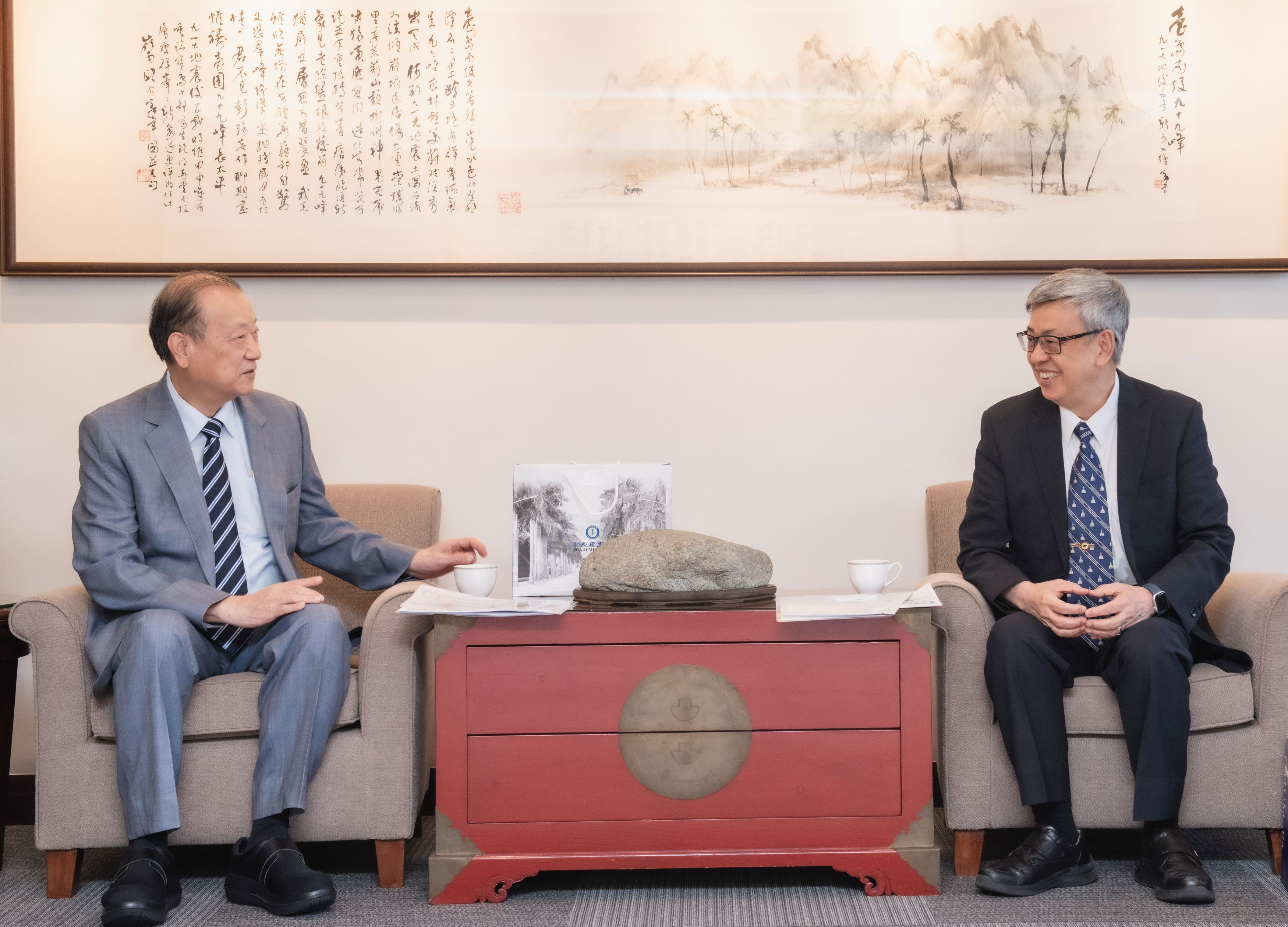 Academia Sinica President Chien-Jen Chen (right) exchanges views with China Medical University Chairman Chang-Hai Tsai. Photo credit: Academia Sinica.

-
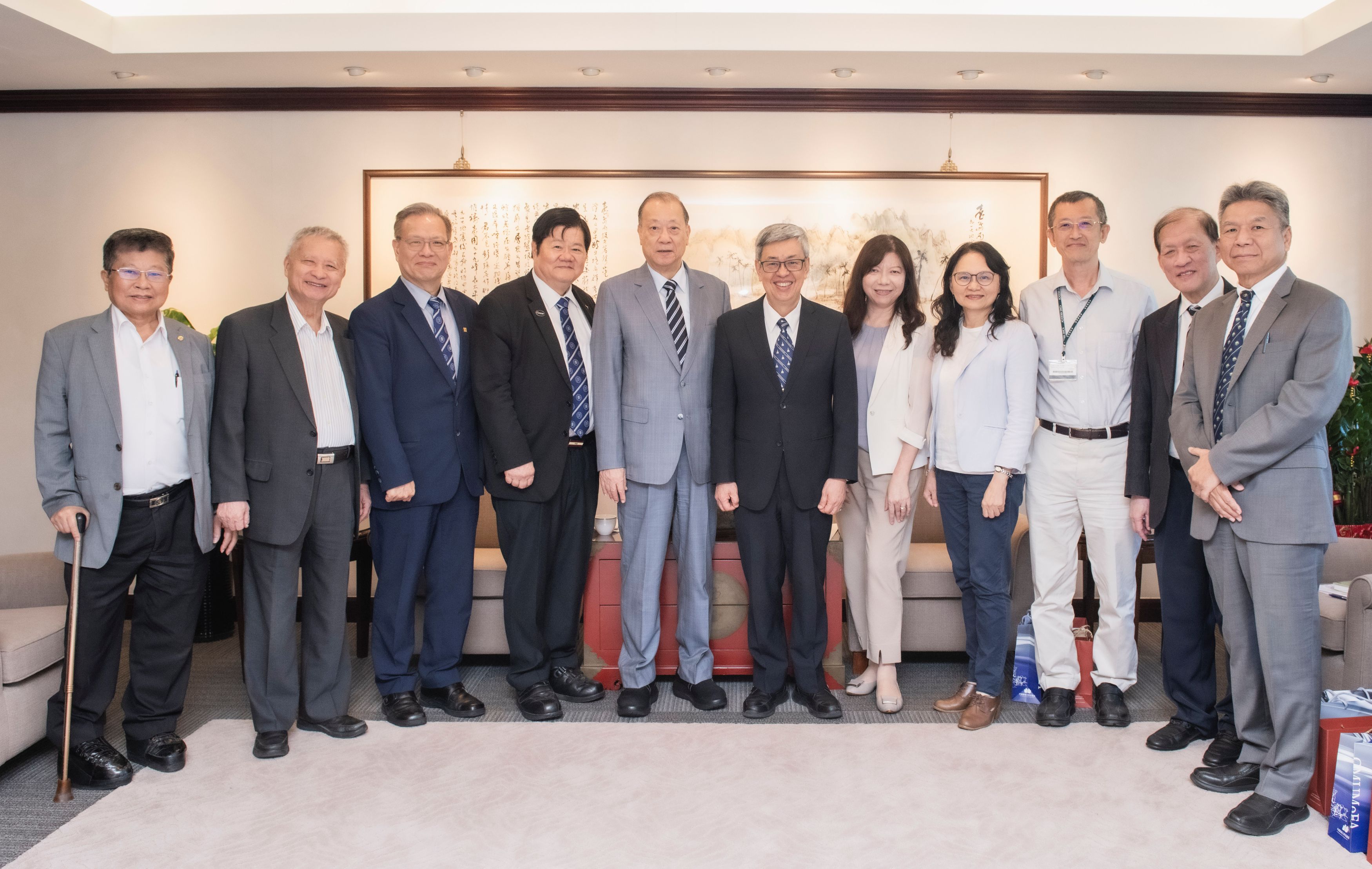 From fifth from the right: Academia Sinica Vice Presidents Yu-Ju Chen; President Chien-Jen Chen; China Medical University Chairman Chang-Hai Tsai; Distinguished Chair Professor and Academician Mien-Chie Hung; President and Academician Ann-Shyn Chiang; and Board Member and Academician Jaung-Geng Lin. Photo credit: Academia Sinica.
-
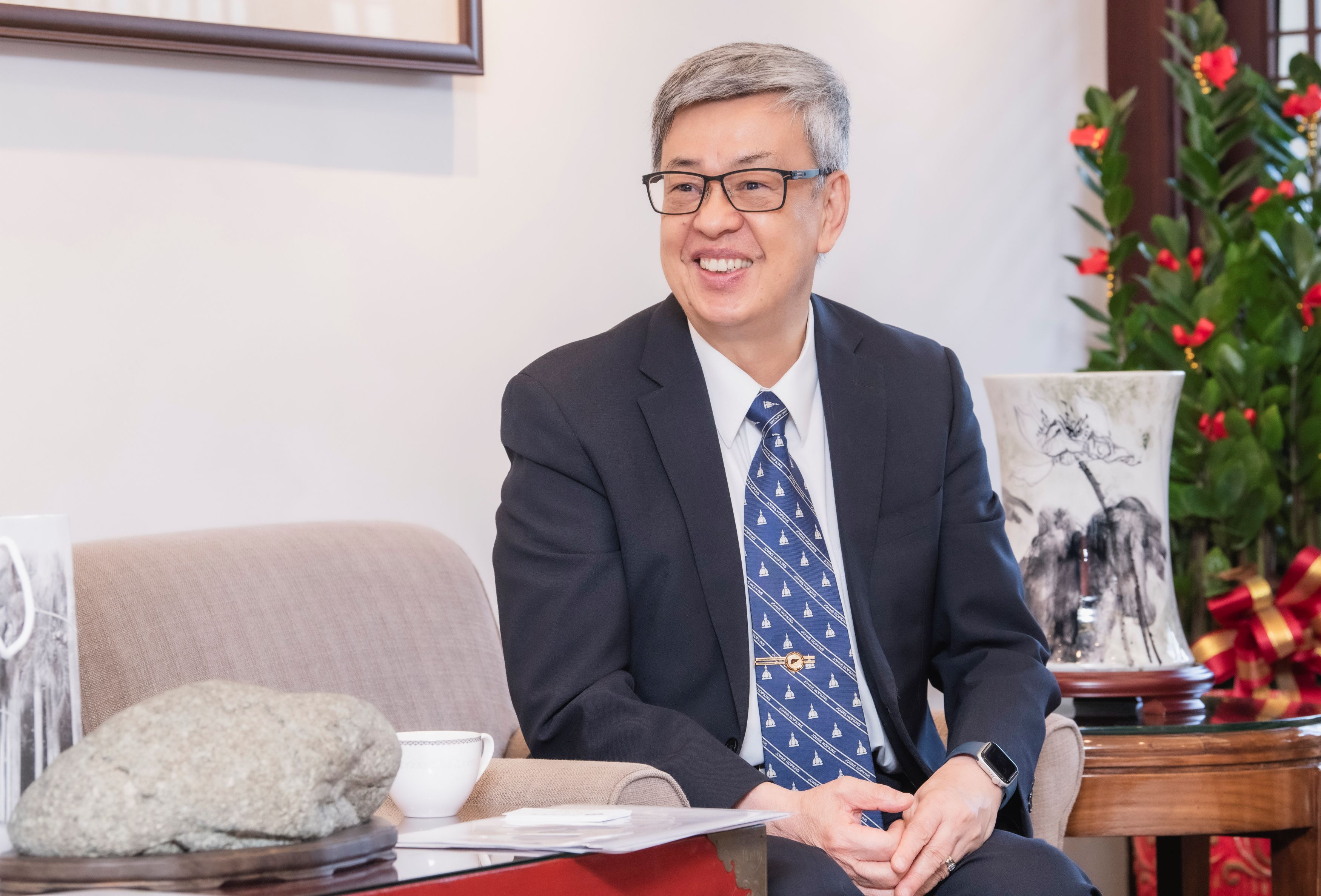 Academia Sinica President Chien-Jen Chen meets with a delegation from China Medical University. Photo credit: Academia Sinica.