




 Home
HomeDate: 2026-04-16
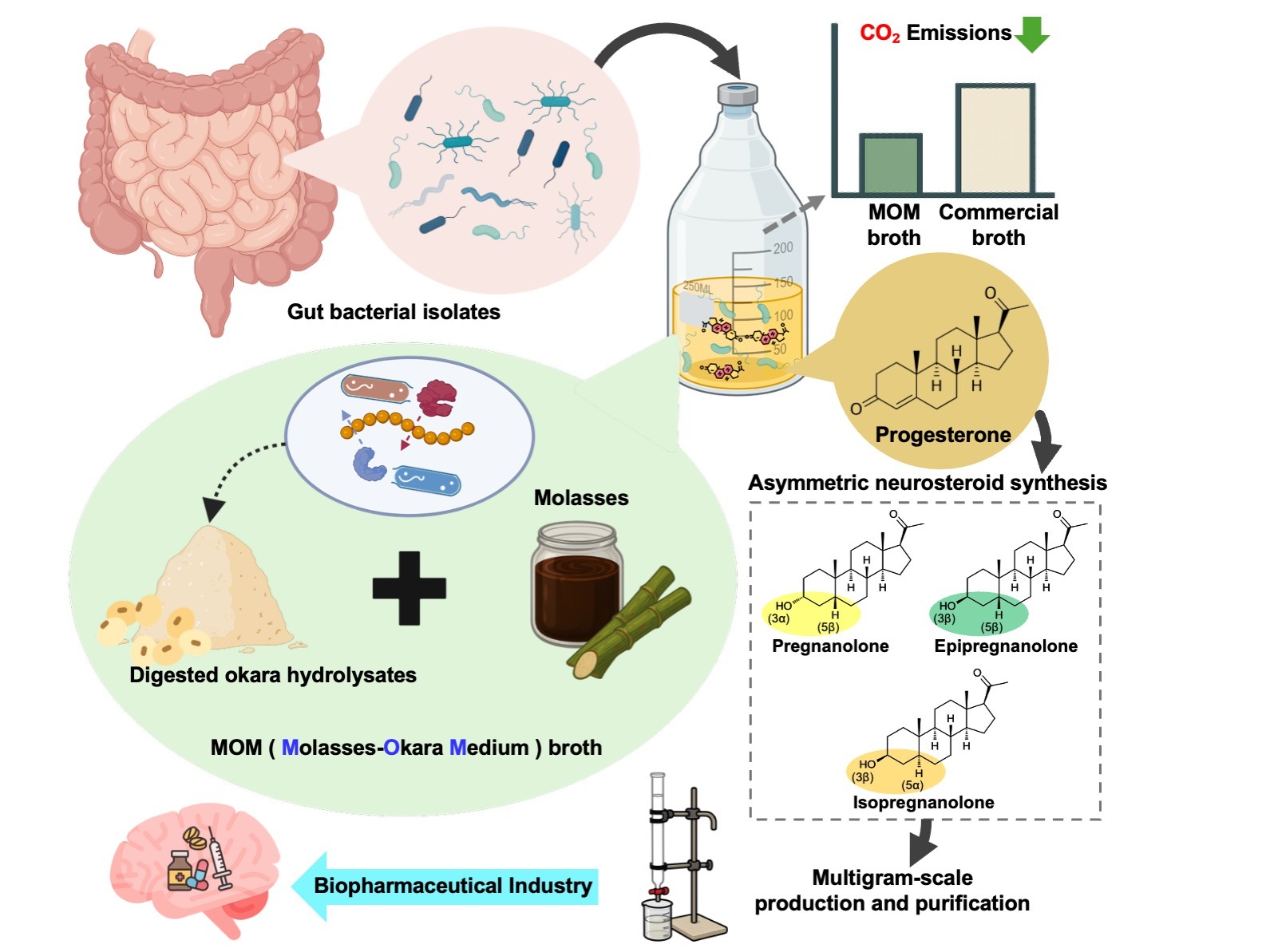
Neurosteroids regulate brain neurotransmission and are linked to anxiety, depression, epilepsy, and PMDD, with several drugs recently receiving FDA approval. However, their complex stereochemical structures make conventional production — whether via animal-tissue extraction or chemical synthesis — costly and inefficient. A multinational team led by Dr. Yin-Ru Chiang at Academia Sinica screened over 3,000 human gut bacterial strains and identified isolates that synthesize neurosteroid isomers with chiral purity exceeding 99%. Using agricultural byproducts such as molasses and soybean residue as the growth medium, the team reduces production costs by 90% and carbon footprint by 95%, achieving multigram-scale yields with pharmaceutical-grade purity via simple column chromatography.
The study reveals three key findings: gut bacteria can convert progesterone into neurosteroids, potentially influencing mood and brain function; an enzyme previously considered vertebrate-exclusive has an industrially superior counterpart in gut microbes; and microbial fermentation with agricultural waste offers a viable green platform for sustainable chiral drug manufacturing. This study was published in Trends in Biotechnology on April 2, 2026.
-
Link