








 Home
HomeDate: 2026-04-08
How animals establish dorsal–ventral polarity is central to understanding bilaterian evolution, yet remains unresolved in spiralians, a diverse clade that includes annelids and molluscs. A team led by Assistant Research Fellow Yi-Jyun Luo at the Biodiversity Research Center, Academia Sinica, has generated the first chromosome-level genome of the brachiopod Lingula anatina and used functional transcriptomics to examine BMP (Bone Morphogenic Protein) signaling during embryogenesis. They show that BMP signaling is asymmetrically activated on the dorsal side during gastrulation, regulated by a balance between ventral chordin expression and BMP ligands. Experimental manipulation confirms that high BMP activity suppresses genes associated with central nervous system development, consistent with patterns observed in other bilaterians.
Comparative analyses reveal strong similarity in BMP-regulated gene expression between Lingula and vertebrates such as Xenopus, supporting deep conservation of dorsal–ventral patterning across bilaterians. The results suggest that this regulatory framework was already present in the spiralian ancestor, with subsequent evolutionary changes reflecting developmental system drift. This study clarifies the molecular basis of dorsal–ventral axis formation in spiralians and provides a comparative framework for understanding the evolution of bilaterian body plans. The work was published in Nature Communications and supported by Academia Sinica’s Career Development Award and grants from the National Science and Technology Council.
The first author is postdoctoral fellow Tom Lewin at the Biodiversity Research Center, Academia Sinica. Co-authors include Keisuke Shimizu (Japan Agency for Marine-Earth Science and Technology), Kazuyoshi Endo (The University of Tokyo), Peter Holland (University of Oxford), and Yue Him Wong (Shenzhen University).
-
Link
-
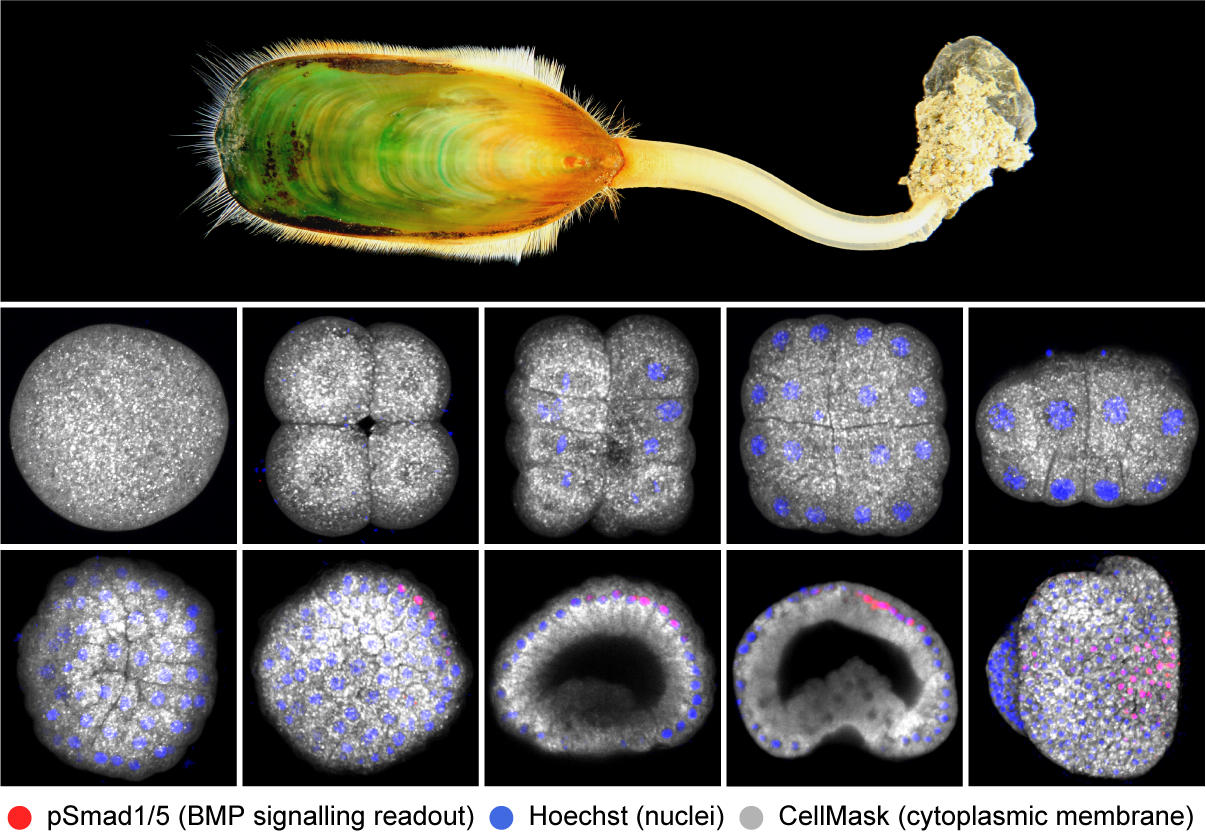 Adult Lingula anatina, a brachiopod with a calcium phosphate shell and pedicle, and its early embryonic development, showing asymmetric activation of BMP signaling. Although classified as a spiralian, its embryogenesis lacks spiral cleavage and instead resembles the cleavage patterns of deuterostomes such as sea urchins and amphioxus. Photo credit: Academia Sinica.

-
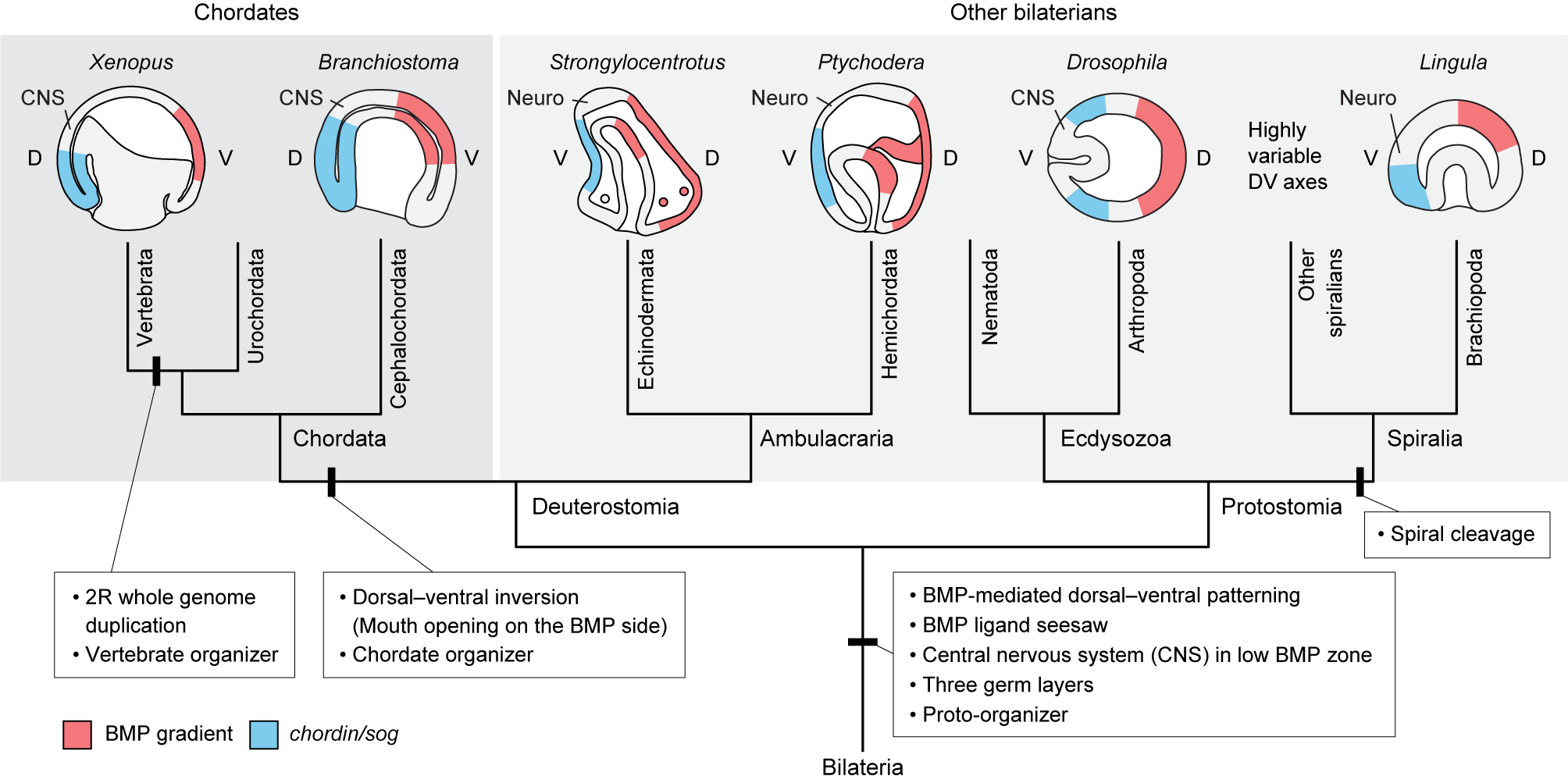 Evolution of BMP signaling and dorsoventral patterning in bilaterians. Despite differences in BMP ligand expression domains, high BMP activity (red) and the expression domains of antagonists such as chordin/sog (blue) are typically localized to the dorsal and ventral sides, respectively, in most animals, including brachiopods. In chordates, dorsoventral inversion results in the opposite distribution, but the core regulatory mechanism remains conserved, with BMP signaling broadly suppressing genes involved in central nervous system development. Photo credit: Academia Sinica.