



 Home
HomeDate: 2025-12-26
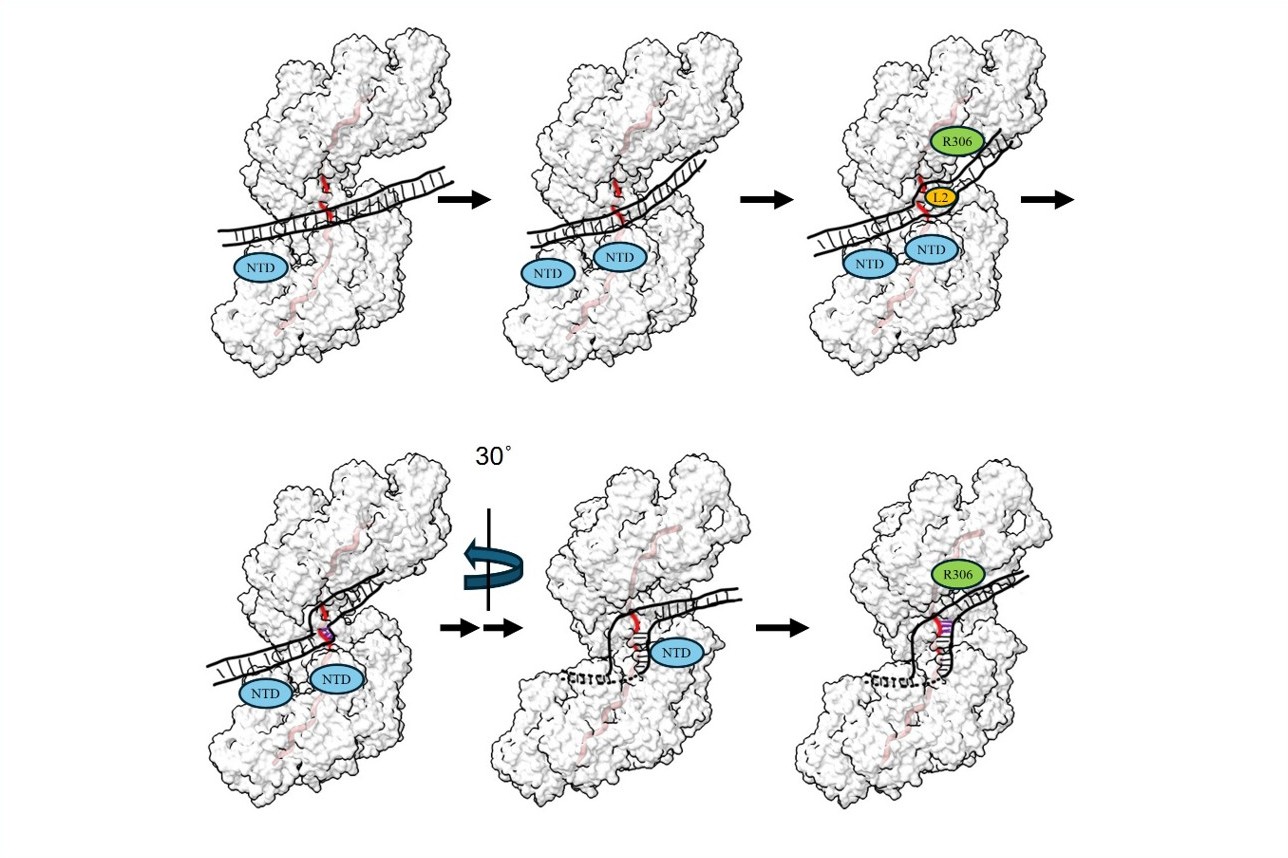
DNA homologous recombination is a critical pathway for repairing DNA double-strand breaks, maintaining genome stability, and generating genetic diversity during meiosis. RAD51 is the central recombinase in this process, responsible for searching for homologous DNA sequences and catalyzing DNA strand exchange to form a characteristic three-stranded D-loop structure. Disruption of RAD51-mediated recombination can lead to genome instability and an increased risk of cancer.
A multidisciplinary research team led by Associate Research Fellow Meng-Chiao Ho at the Institute of Biological Chemistry, in collaboration with Distinguished Professor Peter Chi at National Taiwan University, combined cryo-electron microscopy, computational simulations, and biochemical approaches to determine a series of high-resolution structures of RAD51 bound to homologous DNA. The study demonstrates that positively charged surfaces on RAD51 play a key role in destabilizing and locally opening homologous double-stranded DNA, thereby facilitating strand exchange and D-loop formation. These findings provide important structural insights into the molecular mechanism underlying RAD51-mediated DNA repair. This study was supported by an Academia Sinica Thematic Research Grant and was published in Nature Communications on December 1, 2025.
-
Link