



 Home
Home
- Lectures
- Institute of Sociology
- Location
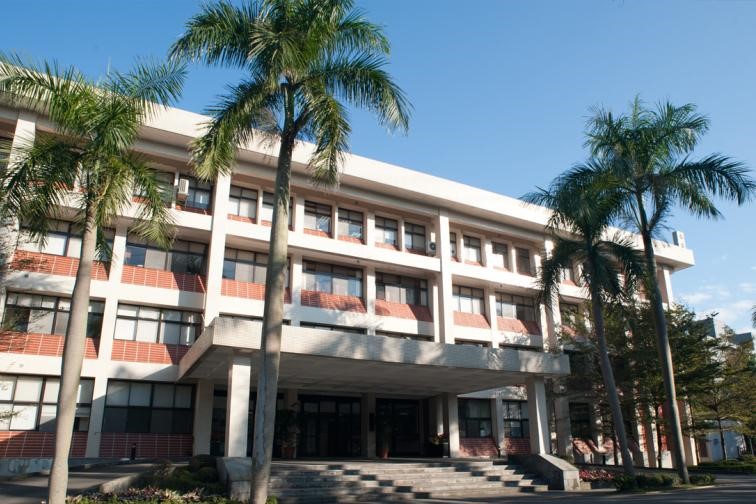
8F, Room802, Institute of Sociology, South Wing, Humanities and Social Sciences Building, Academia Sinica
- Speaker Name
Horng-luen Wang (Research Fellow and Deputy Director, Institute of Sociology, Academia Sinica)
- State
Definitive
- Url
2026-08-25 14:30 - 16:30

Recent polls have consistently shown that a majority of people in Taiwan prefer to maintain the “status quo” when asked about the future of cross-Strait relations. Yet the meaning of the status quo itself remains surprisingly underexamined. It is often treated as a self-evident middle position between unification and independence, or a pragmatic formula for stability. But what, exactly, is being maintained, and what on earth does the “status quo” mean? A sovereign state, an unresolved civil war, a democratic polity without normal international recognition, or a fragile condition sustained by deterrence, diplomacy, and imagination?
This talk argues that Taiwan’s status quo should not be understood merely as stagnation or avoidance of choice. Rather, it is a complex political condition that exposes the limits of conventional assumptions about sovereignty, national identity, and international order. Drawing on recent post-classical approaches in social theory and IR, the talk suggests that Taiwan’s status quo may be better understood as a kind of “Schrödinger’s state”—namely, a “superposition state” contingent on different conditions of observation.
Reframing the status quo in this way opens new research questions and political possibilities. Internally, it invites Taiwan to move beyond exhausted binaries such as blue vs. green, unification vs. independence, and ROC vs Taiwan, while sustaining a democratic community capable of containing multiple identities without collapsing into mutual hostility. Externally, it challenges Beijing, Washington, regional actors, and the international community to reconsider whether existing frameworks adequately capture and preserve Taiwan’s open-ended reality. In other words, the status quo may not be a problem to be overcome, but a starting point for imagining a new paradigm for academic research and international society.