




 Home
Home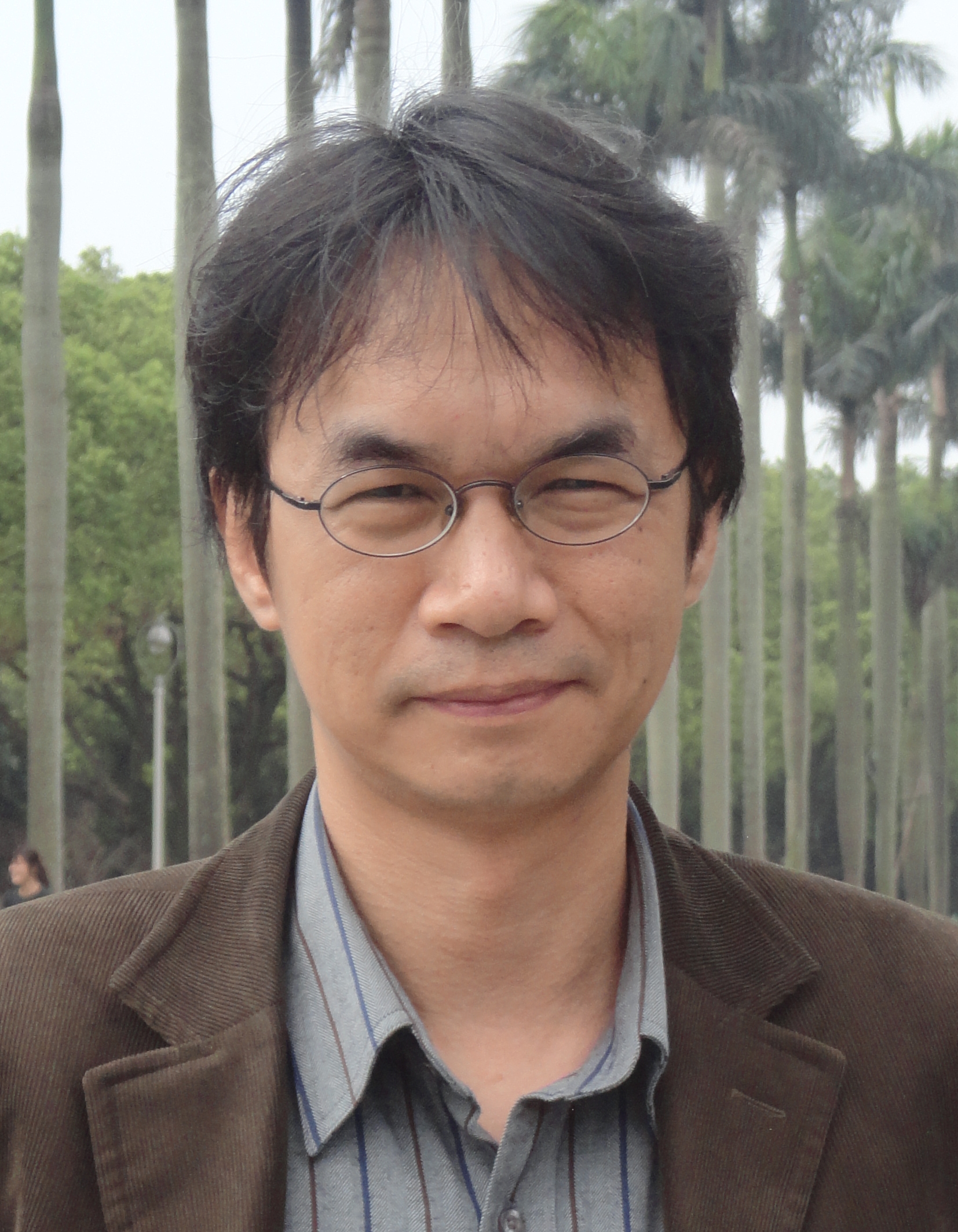
- Lectures
- Institute of Atomic and Molecular Sciences
- Location
Dr. Poe Lecture Hall, IAMS (NTU Campus)
- Speaker Name
Prof. Chun-Wei Chen (Department of Materials Science and Engineering, National Taiwan University)
- State
Definitive
- Url
2026-03-04 14:00 - 15:00

Abstract:
“Spin” has recently been reported as an important degree of electronic freedom to improve the performance of electrocatalysts and photocatalysts. In the first part of my talk, I would like to present the manipulation of spin-polarized electrons to boost the photocatalytic CO2 reduction reaction (CO2RR) efficiencies through controlling magnetic doping, chirality, and defect engineering.[1-3] The origin of enhanced photocatalytic CO2RR efficiencies is due to the increased number of spin-polarized photoexcited carriers, resulting in prolonged carrier lifetime and suppressed charge recombination. The fundamental mechanism of controlling spin-polarized electrons in photocatalysis would be addressed. In the second part of my talk, I would like to present the manipulation of spin-polarized electrons of an electrocatalyst to promote the oxygen evolution reaction (OER). Spin selection has been described as a possible way to promote electrocatalytic OER, which involves the process of forming triplet-state O2 from singlet-state species (OH− or H2O). I would like to show our recent results of controlling spin exchange interactions and spin-selected electron transfers of electrocatalysts to enhance OER performance. [4,5] By either applying a magnetic field or controlling magnetic dopants and the chirality of electrocatalysts, the OER performances can be significantly enhanced. Several in-situ analytic techniques, such as in-situ X-ray absorption spectroscopy (XAS) and X-ray emission spectroscopy (XES), were also performed to support the understanding of the fundamental mechanism. Our results suggest that manipulating the spin-polarized electrons and spin-exchange interactions of electrocatalysts and photocatalysts is an effective strategy to enhance their catalytic performances.
Reference:
[1]. Chun-Wei Chen et al, Journal of the American Chemical Society, 144,15718, (2022)
[2]. Chun-Wei Chen et al, Journal of the American Chemical Society, 146,23278, (2024)
[3]. Chun-Wei Chen et al, Journal of the American Chemical Society,147, 40347,(2025)
[4]. Chun-Wei Chen et al, Journal of the American Chemical Society, 147,13286 (2025)
[5]. Chun-Wei Chen et al, Advanced Functional Materials, 2305792, (2023)