

 Home
HomeDate: 2026-03-17
Author: Dr. Eric Chi-Ching Cheung, Assistant Research Fellow, Genomics Research Center
A significant event for our academic community took place on February 11 as Nobel Laureate Sir Paul Nurse paid a highly anticipated visit, sparking intellectual curiosity and sharing scientific wisdom. Renowned globally for his seminal discoveries regarding the cell cycle, Sir Paul delivered a captivating keynote lecture titled “What is life?”, drawing from his acclaimed book, What is Life? Understanding Biology in Five Steps.
The visit extended far beyond a traditional keynote address. Following his talk, Sir Paul immersed himself in our scientific community, engaging in conversations with junior Principal Investigators, postdoctoral researchers, and PhD students. His visit offered a rare glimpse into the mind of a scientist who has not only fundamentally altered our understanding of biology but has also masterfully steered some of the world's leading research institutions.
Tackling the Ultimate Question: What is Life?
The highlight of the visit was his extensive lecture, where Sir Paul tackled one of the oldest and biggest questions in science. He began by reminding the audience that while the question sounds simple, it is notoriously difficult to answer. Noting that dictionaries and online sources often offer unsatisfying definitions, he remarked, “There isn’t really a very good definition of life.”
Rather than settling for a single clever phrase, Sir Paul utilized five major ideas in biology to uncover what makes living things both familiar and extraordinary, demonstrating how these concepts speak to all of us and not just researchers:
1. Life Is Built of Cells: Cells are the smallest things that are truly alive. Even a single yeast cell, the very organism that launched his career, can grow, divide, respond to its environment, and reproduce.
2. Life Depends on Genes and Heredity: Life carries information across generations via genes encoded in DNA. Sir Paul vividly described this biological code as “[A] digital sequence of information… similar to information storage in computers.” These instructions build and operate organisms, shaping both the continuity and variation of life.
3. Evolution by Natural Selection Creates Change: Addressing the dynamic nature of life, he highlighted how small genetic changes over generations allow beneficial traits to persist. “Evolution by natural selection delivers purpose without design,” he noted, beautifully encapsulating how life appears so highly engineered despite arising from unguided natural processes.
4. Life Is Chemistry: Stripping away the mysticism of vitalism, Sir Paul reminded the audience that inside every cell, thousands of reactions happen simultaneously. Life, at its core, is chemistry in action.
5. Life Processes Information: Finally, living things do not just carry information; they actively use it. Cells constantly gather and respond to internal and external signals to thrive. “Information processing permeates all aspects of life,” he argued, showing that biological systems are as informational as they are physical.
When we assemble these five pillars, Sir Paul argued, life is best understood as a chemical, physical, and informational machine. But he went beyond mere scientific definitions. Reminding the audience of our shared evolutionary ancestry with all flora, fauna, and microbes, he posed a profound ethical question: “If we’re related to every living thing on the planet, do we not have a special responsibility for every living thing on this planet? They are really all our relatives.” Understanding life scientifically can help us make better decisions about medicine, environment, and ethics, because biology isn’t just for scientists: it’s part of the human story.
Fostering the Future: Advice on Scientific Leadership
Following the philosophical heights of his lecture, Sir Paul devoted the next day to the practical realities of a scientific career. Transitioning from a postdoctoral researcher to a Principal Investigator is widely considered one of the most challenging phases in academia. Recognizing this, he shared candid advice on setting up a new laboratory, securing funding, and the nuances of scientific leadership.
He drew upon his own storied career, which began with studying biology at the University of Birmingham and completing his PhD at the University of East Anglia (UEA). It was during his postdoctoral years at the University of Edinburgh, working in Murdoch Mitchison’s lab, and later at the University of Sussex, that he began his pioneering yeast genetics work. His subsequent journey saw him establish his own lab at the Imperial Cancer Research Fund (ICRF), hold a professorship at the University of Oxford, and eventually lead as President of Rockefeller University in New York, President of the Royal Society, and founding Director and Chief Executive of the Francis Crick Institute in London.
Sir Paul emphasized the importance of fostering a collaborative, multidisciplinary lab culture and protecting creative thinking from administrative burdens. He advised new PIs to focus on identifying the "right" questions rather than simply chasing incremental data and underscored the importance to attract the right lab personnel through extensive and carefully constructed interviews. In parallel sessions with PhD students and postdocs, he reflected on the emotional rollercoaster of bench science and recommend PhD students prioritize acquiring essential skills that will help them to accomplish future endeavour in research. His message was clear: resilience, curiosity, and a willingness to embrace unexpected results are the true hallmarks of a successful career.
A Legacy of Discovery: From the Nobel Prize to Recent Breakthroughs
While Sir Paul eloquently unpacked the broad philosophy of life, his discussions with trainees also highlighted that he remains an active, trailblazing force at the bench. In 2001, he was jointly awarded the Nobel Prize in Physiology or Medicine for the discovery of key regulators of the cell cycle. Using the fission yeast Schizosaccharomyces pombe, he identified the cdc2 gene, which encodes a cyclin-dependent kinase (CDK), proving that this regulatory mechanism is highly conserved from yeast to humans.
His laboratory continues to push the boundaries of this field, as evidenced by his recent high-impact publications. In a 2022 Nature paper1, his group tackled a long-standing debate concerning the core control principles of the eukaryotic cell cycle. They demonstrated that S-CDKs (which initiate DNA replication) and M-CDKs (which drive mitosis) possess remarkably similar substrate specificities. By showing that an overall increase in S-CDK activity can overcome minor differences and essentially substitute for M-CDK function, his team elegantly reconciled opposing views, proposing a predominantly quantitative model for cell cycle control.
Building on this, his group’s 2025 publication2, also in Nature, unravelled the spatiotemporal orchestration of mitosis. His lab revealed that CDK is first activated within the nucleus, generating a robust bistable response that propagates the mitotic signal to the cytoplasm, with centrosomal cyclin-CDK acting as a 'signal relayer'. This work fundamentally shifts our understanding by highlighting how the CDK control system operates within distinct regulatory domains to effectively monitor DNA replication and preserve genome integrity.
Conclusion
Sir Paul Nurse’s visit was more than just a lecture; it was a comprehensive session in scientific philosophy, leadership, and relentless inquiry. By bridging his reflections in "What is life?" with his cutting-edge publications, and coupling that with dedicated mentorship for junior scientists, he left an enduring mark on our institution.
For the PhD students looking at their first failed experiments, the postdocs writing major fellowships, and the junior PIs navigating lab management, Sir Paul provided a thoughtful reminder: the scientific pursuit is not just about data, it is about understanding the chemical, physical, and informational machines that connect us to every living relative on this planet.
1. Basu, S. et al. Core control principles of the eukaryotic cell cycle. Nature 607(7918):381-386 (2022)
2. Kapadia, N. and Nurse, P. Spatiotemporal orchestration of mitosis by cyclin-dependent kinase. Nature 643(8074):1391-1399 (2025).
-
 Sir Paul delivered a public lecture at Academia Sinica on February 11. The event was hosted by Dr. Chih-Hao Lee of the Genome Research Center.

-
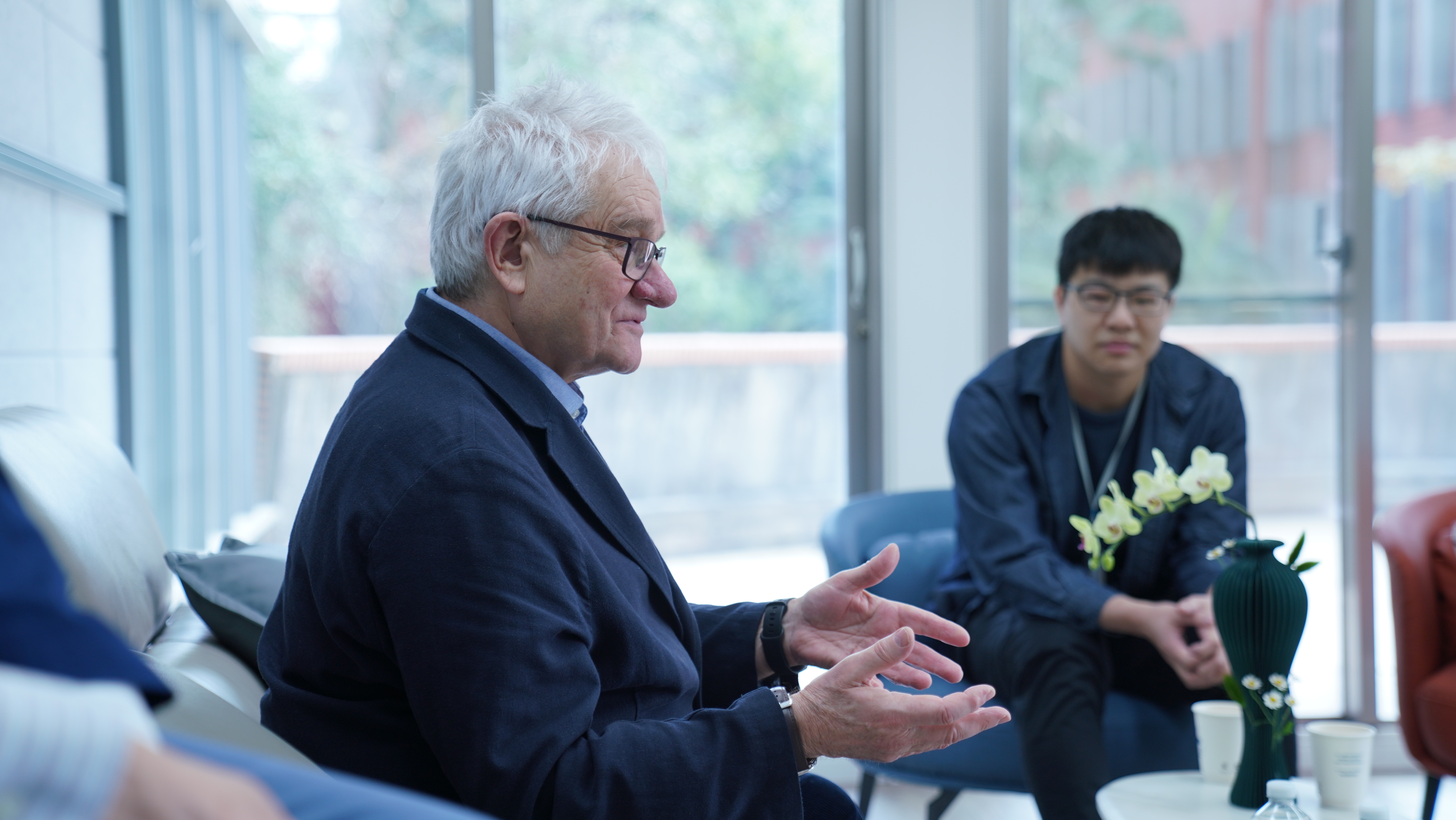 Sir Paul emphasized the importance of fostering a collaborative, multidisciplinary lab culture and protecting creative thinking from administrative burdens.
-
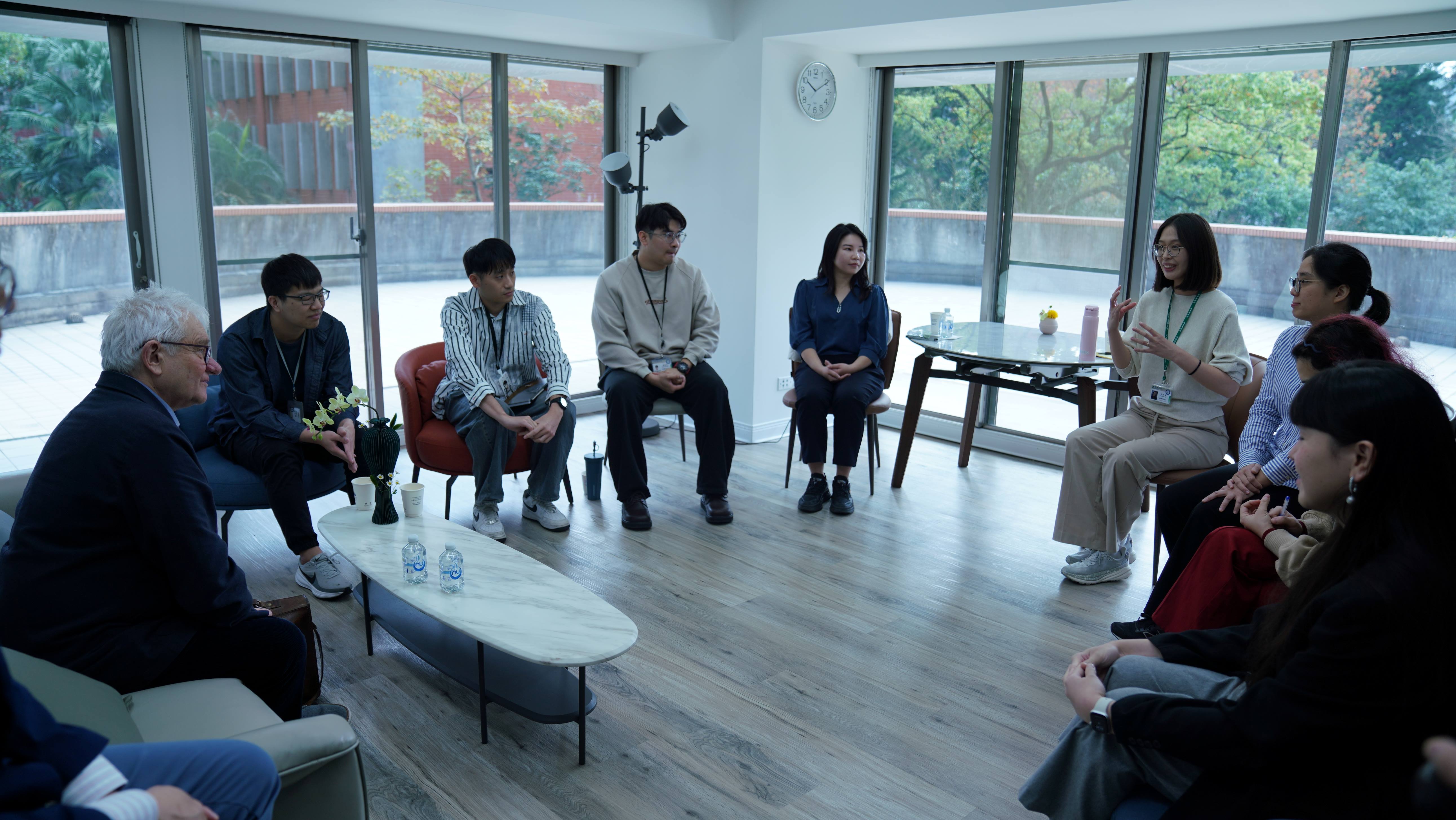 Sir Paul shared candid advice on his own storied career with PhD students and postdocs at Genomics Research Center.