





 Home
HomeDate: 2026-03-30
The eighth lecture in Academia Sinica’s TAIWAN BRIDGES program featured Professor Edvard I. Moser of the Norwegian University of Science and Technology, recipient of the 2014 Nobel Prize in Physiology or Medicine. In his lecture, titled “The Brain’s GPS: How We Know Where We Are” Professor Moser explored the mysteries of how the brain constructs its system for spatial cognition.
President James C. Liao noted that, while studying the firing patterns of neurons in the brains of moving mice, Professor Moser discovered that certain neurons fired at multiple locations, and that these locations formed a remarkably precise hexagonal pattern. Through systematic observation and theoretical verification, he clarified this phenomenon and ruled out the possibility that it was merely an artifact of the recording instruments. This work laid a critical foundation for the study of the brain’s internal mapping system and opened up a new frontier in neuroscience. President Liao emphasized that Professor Moser’s achievement lies not only in his innovative discovery, but also in the sustained rigor of his research, which has significantly advanced our understanding of how the brain works.
As the first scientist to discover and demonstrate the existence of grid cells, Professor Moser revealed that these neurons function like the brain’s GPS, helping us determine where we are and which direction we are heading. Together with May-Britt Moser and John O’Keefe, he further showed that the brain builds an internal map of space through the cooperation of grid cells and place cells: place cells tell us where we are, while grid cells provide the coordinates of distance and direction. Working together, they make precise navigation possible. This groundbreaking research transformed the scientific understanding of how the brain perceives space, while also offering important clues for understanding memory, learning, and neurodegenerative diseases such as Alzheimer’s disease. For these contributions, they were awarded the Nobel Prize in Physiology or Medicine.
In his lecture, Professor Moser asked: “Without a map, how do we know where we are and where we are going?” He explained that the ability to know one’s location and direction is among the most essential survival skills in early biological evolution, crucial for finding food, avoiding predators, and even reproducing. Within the entorhinal cortex of the mammalian brain are specialized neurons responsible for encoding position. Among them, grid cells are particularly remarkable: they become active only when an animal or person is in certain specific locations. Intriguingly, when all of these locations are plotted on a map, they form a regular hexagonal grid, as if the brain had laid down an invisible coordinate system. Different grid cells vary in the extent of the space they cover—some densely, some sparsely—and their overlapping arrangement enables the brain to flexibly measure distance and direction. Together with other position-related cells, they create a constantly updated dynamic map, much like a built-in GPS. Even when the environment changes or cues are incomplete, the brain can still maintain a stable sense of space.
Beyond spatial coding, Professor Moser also discussed how the brain processes time. Research shows that neurons in the entorhinal cortex work together to help the brain distinguish the sequence of events, dividing experience into temporal segments that allow us to remember and recall what happened. More importantly, the coding of space and time is tightly integrated in the brain, enabling us not only to know where we are, but also to remember the order in which events occurred. This system lies at the core of the brain’s navigation and memory functions. When it is damaged, both spatial orientation and memory are affected—Alzheimer’s disease being a prime example.
Professor Moser further pointed out that the brain’s internal spatial map is present very early in life. Even before the senses are fully developed, the brain is already capable of establishing a basic sense of space. This suggests that human spatial cognition may have an innate basis, offering new neuroscientific evidence in the longstanding debate over nature versus nurture. In terms of medical applications, he emphasized that the entorhinal cortex is one of the earliest brain regions affected by Alzheimer’s disease, and that research on this area may contribute to the early diagnosis and treatment of neurodegenerative disorders.
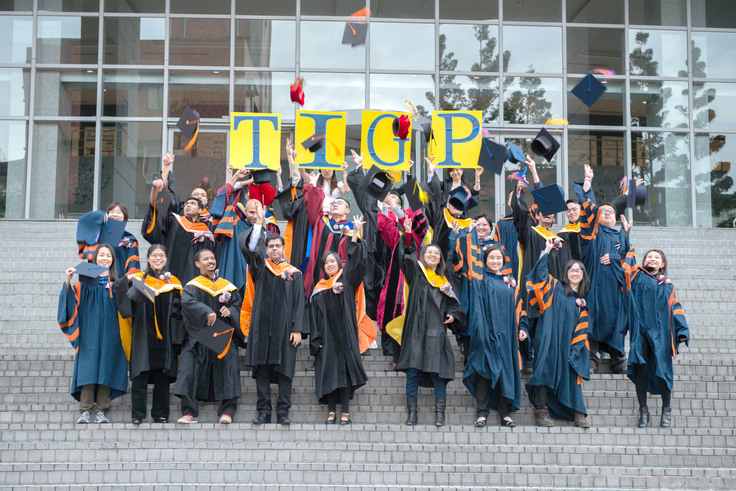
The TAIWAN BRIDGES Program is a joint initiative led by Academia Sinica in collaboration with 11 domestic academic and research institutions and the International Peace Foundation. It is dedicated to fostering in-depth intellectual exchanges between Taiwan and top global scholars. Starting from November 2025, Academia Sinica will host more than ten Nobel Laureates over the course of one year, spanning the fields of peace, physics, chemistry, biomedicine, and literature. This program underscores Academia Sinica's continued commitment to strengthen international academic collaboration and advancing frontier research.
On April 7, Academia Sinica will also host Professor Kurt Wüthrich, recipient of the 2002 Nobel Prize in Chemistry, who will deliver a lecture titled “The Molecules of Life, AI and Human Health.” Registration is warmly welcomed.
Registration link: https://forms.gle/nCazxi6XujU9VzY1A
-
Ellen Lu, Section Chief,Department of International Affairs, Academia Sinica
(02) 2787-2688,phlu@as.edu.tw
-
Ms. Savid Paljilji, Media & Public Affairs, Secretariat, Academia Sinica
(02) 2789-9727,savid@as.edu.tw
-
Ms. Steffi Tung Lin, Media & Public Affairs, Secretariat, Academia Sinica
(02) 2789-8820,tunglin@as.edu.tw