




 Home
HomeDate: 2025-12-10
Academia Sinica and the CPC Corporation have recently drilled Taiwan’s first deep geothermal exploratory well. The joint project in Yuanshan, Yilan includes comprehensive geological and heat-source analyses. According to the Academia Sinica research team, this experimental well is the first to drill nearly 4,000 meters underground, with a bottom-hole temperature approaching 150 degrees Celsius, confirming the presence of an ascending heat source. The findings indicate that the deep geothermal resources in the northern Yilan Plain possess high development potential and warrant further exploration. Through the concerted efforts of industry, government, academia, and research institutions, deep geothermal energy may soon become a driving force in Taiwan’s green energy transition.
Heat Source Conditions Support Use of Hydraulic Stimulation
Dr. Jian-Cheng Lee, Research Fellow at the Institute of Earth Sciences, Academia Sinica, and Principal Investigator of the Taiwan Geothermal Research and Technology Development Project, stated that the well temperature was still below 100 degrees Celsius when the drilling reached a depth of about 3,000 meters, so the team was quite anxious. However, the temperature then began to rise rapidly, especially after reaching a depth of 3,500 meters, where it increased sharply (estimated at about 90 degrees Celsius per kilometer). When the drilling reached its maximum depth, the temperature had risen to approximately 150 degrees Celsius, indicating that a heat source does exist underground and even showed an upward-migrating trend. Therefore, the drilling site might be only “a wall away” from the center of a high-temperature heat source suitable for development at around 3,000 meters.
Analysis of the drilling data provided by the CPC Corporation indicate that the lower formations of the well (the Hsi-tsun Formation and the Chung-ling Formation) exhibit favorable geological conditions suitable for applying a new hydraulic stimulation method for heat extraction, which is less likely to induce earthquakes. This technique can effectively create hot water pathways for geothermal development.
Additional Exploratory Wells Recommended for Future Development
Dr. Yue-Gau Chen, Executive Secretary of the Center for Sustainability Science at Academia Sinica, stated that, based on international experience, it typically requires three to five exploratory wells to develop a geothermal power plant in a given geothermal field. The substantial findings from the first deep geothermal exploratory well in Yuanshan, Yilan, confirm that the geothermal potential is worth additional exploratory drilling. Such efforts will help create a three-dimensional depiction of the geothermal upflow structure, serving as a basis for future engineering design and construction planning for heat extraction.
The Yuanshan well has been converted into a temporary monitoring site. The research team is using fiber-optic distributed acoustic (temperature) sensing technology to investigate the dynamics of the subsurface heat source and rock formations. Through continual data collection, the team aims to determine the location and distribution of high-temperature rock layers and the pathways of the heat source movements. Based on these results, the conventional geothermal systems and the Enhanced Geothermal Systems (EGS) will be evaluated, providing reference for the development and construction of future geothermal power plants.
The related research report can be found at https://reurl.cc/W8Axax
-
Dr. Yue-Gau Chen, Center for Sustainability Science, Academia Sinica
(02) 2787-5800,ygchen@gate.sinica.edu.tw
-
Dr. Jian-Cheng Lee, Research Fellow, Institute of Earth Sciences, Academia Sinica
02-2783-9910 #1413,jclee@earth.sinica.edu.tw
-
Ms. Tsuey-Yin Piong, Media & Public Affairs, Secretariat, Academia Sinica
(02) 2789-8821,fangzi@as.edu.tw
-
Ms. Steffi Tung Lin, Media & Public Affairs, Secretariat, Academia Sinica
(02) 2789-8820,tunglin@as.edu.tw
-
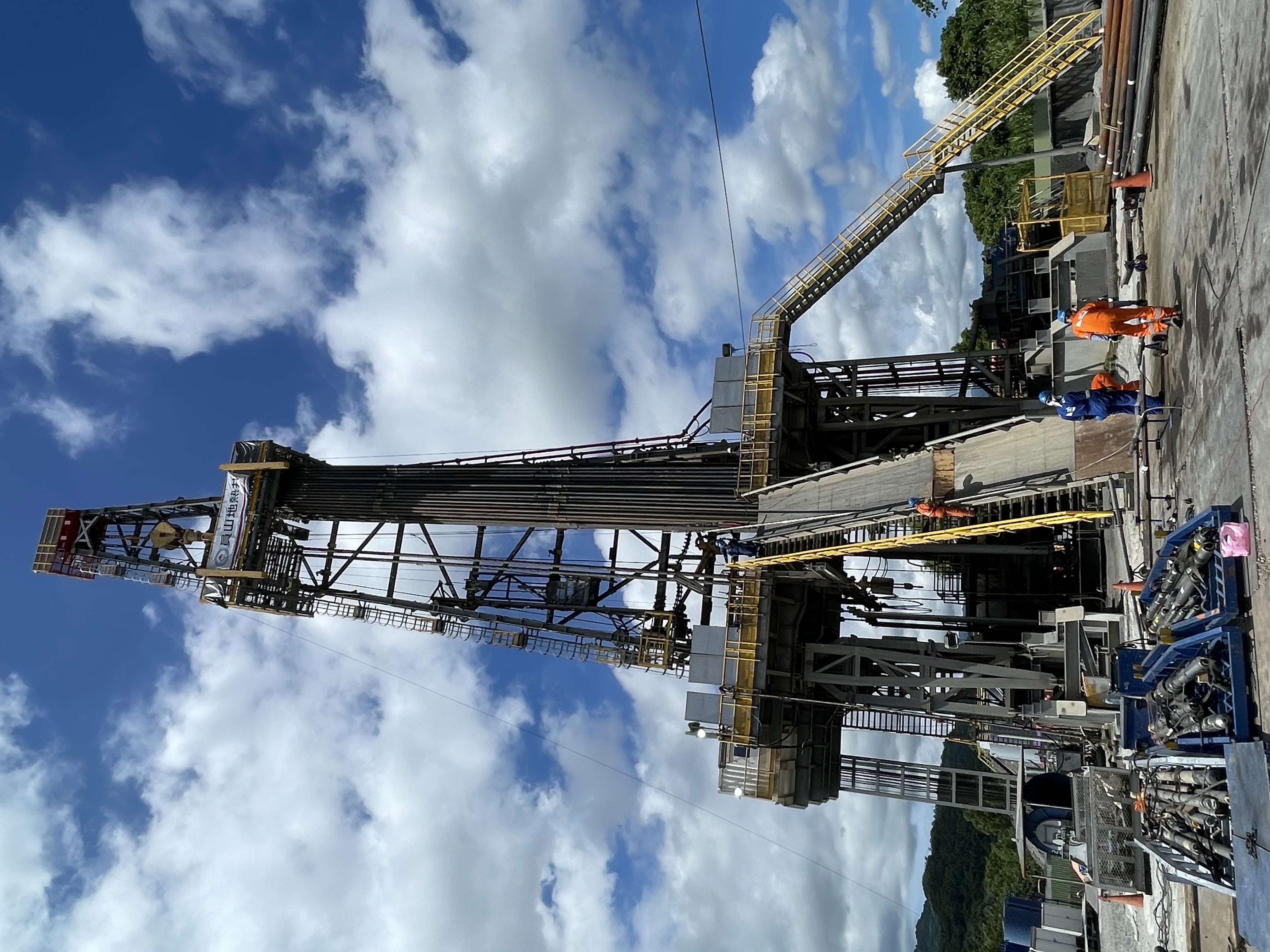 Academia Sinica and the CPC Corporation discover high-potential geothermal reservoir after drilling nearly 4,000 meters. Photo credit: Academia Sinica.

-
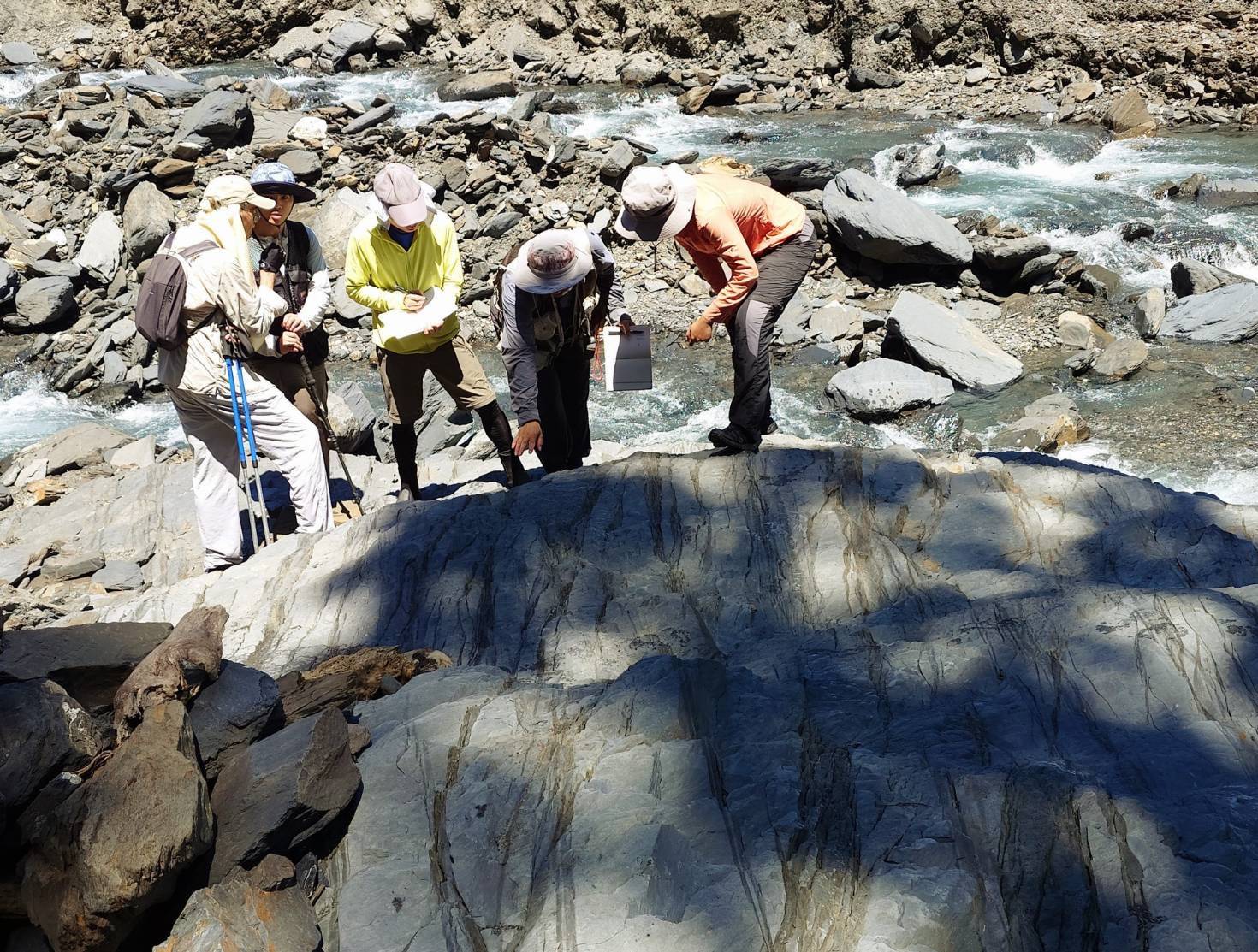 The research team conducted geological surveys to document stratigraphic attitudes, fracture density, and stress orientations. Photo credit: Academia Sinica.
-
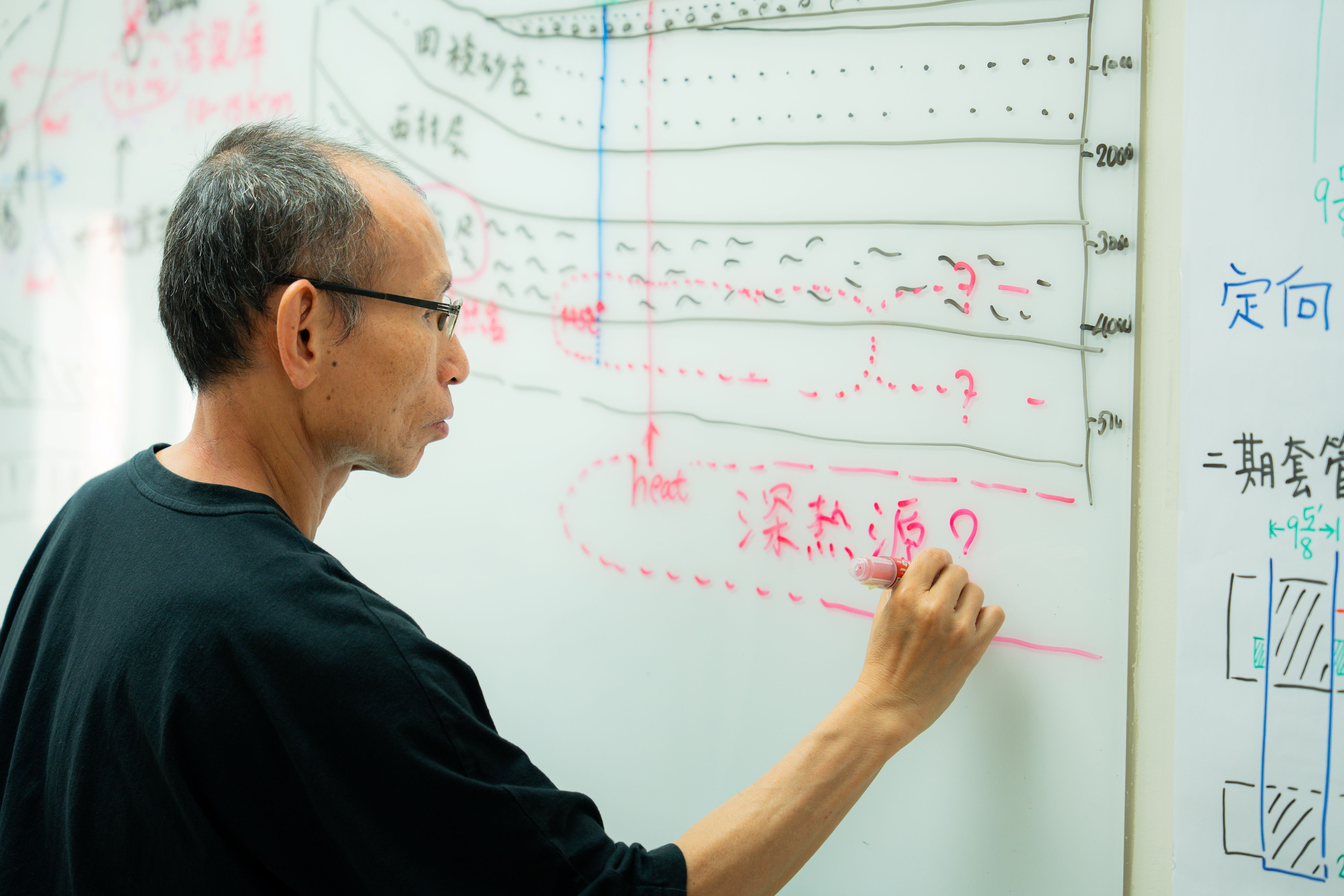 Dr. Jian-Cheng Lee, Research Fellow at the Institute of Earth Sciences, Academia Sinica, created a conceptual geological model of the Yuanshan geothermal system in Yilan. Photo credit: Academia Sinica.
-
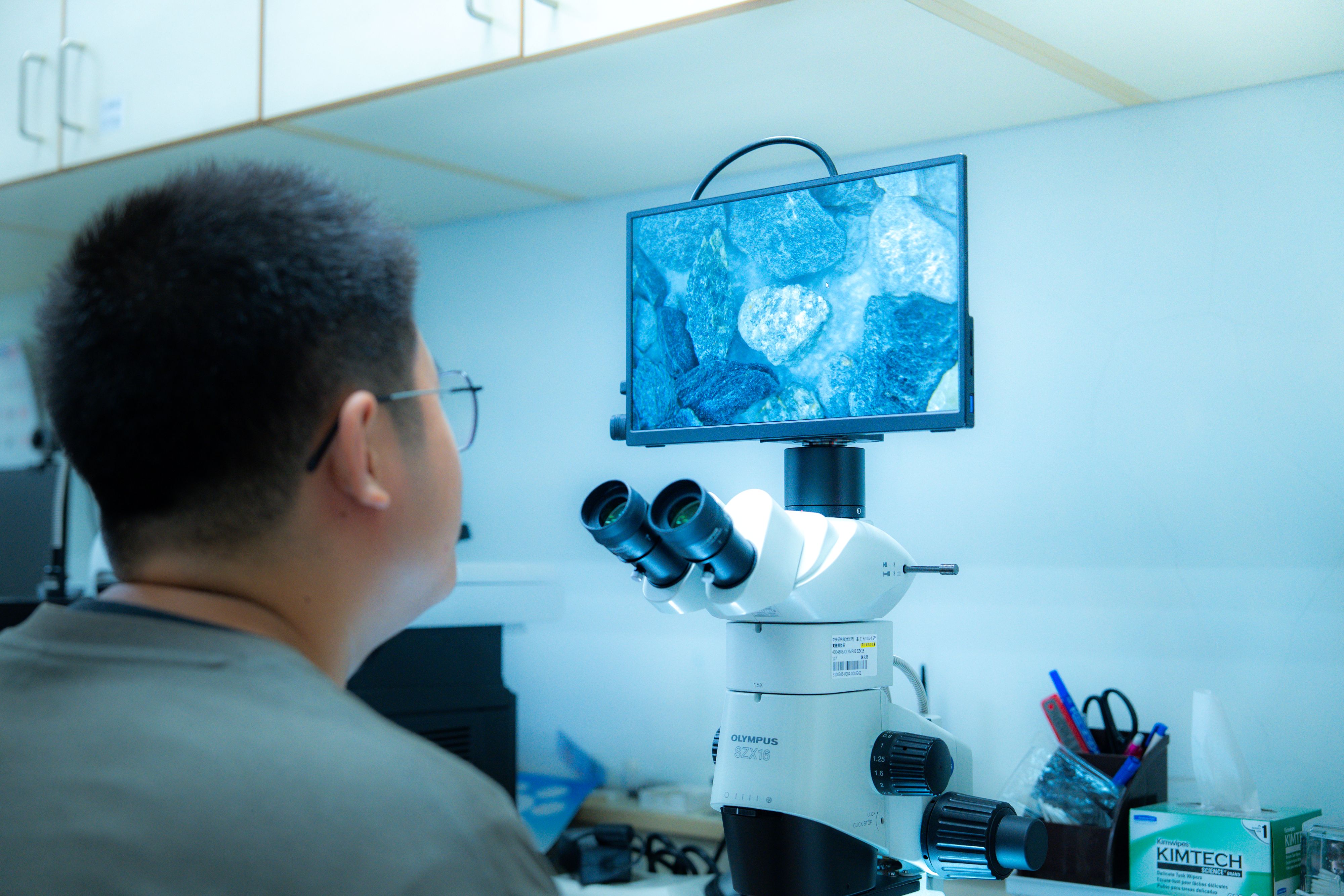 The research team used high-magnification microscopy to identify lithic clast types and mineral compositions. Photo credit: Academia Sinica.