




 Home
HomeDate: 2026-04-08
A group of scientists led by Dr. Yijuang Chern at the IBMS, Academia Sinica has identified a promising new approach to reduce brain inflammation, a key driver of neurodegenerative diseases such as Huntington’s disease. The study focuses on Galectin-3 (Gal3), a protein that senses cellular damage and activates immune responses in the brain, but has been difficult to target with brain-penetrant drugs.
Researchers developed an innovative imaging platform to directly monitor Gal3 in microglia and screened about 24,000 compounds. They identified berbamine hydrochloride as a potent inhibitor that can cross the blood-brain barrier and suppress Gal3. The compound works by disrupting interactions between Gal3 molecules and inflammation-related proteins. In a Huntington’s disease mouse model, treatment improved motor function, reduced toxic protein accumulation, and restored key brain signaling pathways. These findings highlight the first effective strategy to target intracellular Gal3 and provide a platform for developing new therapies for inflammation-driven neurodegenerative diseases. This study was published in Brain on March 3, 2026.
-
Link
-
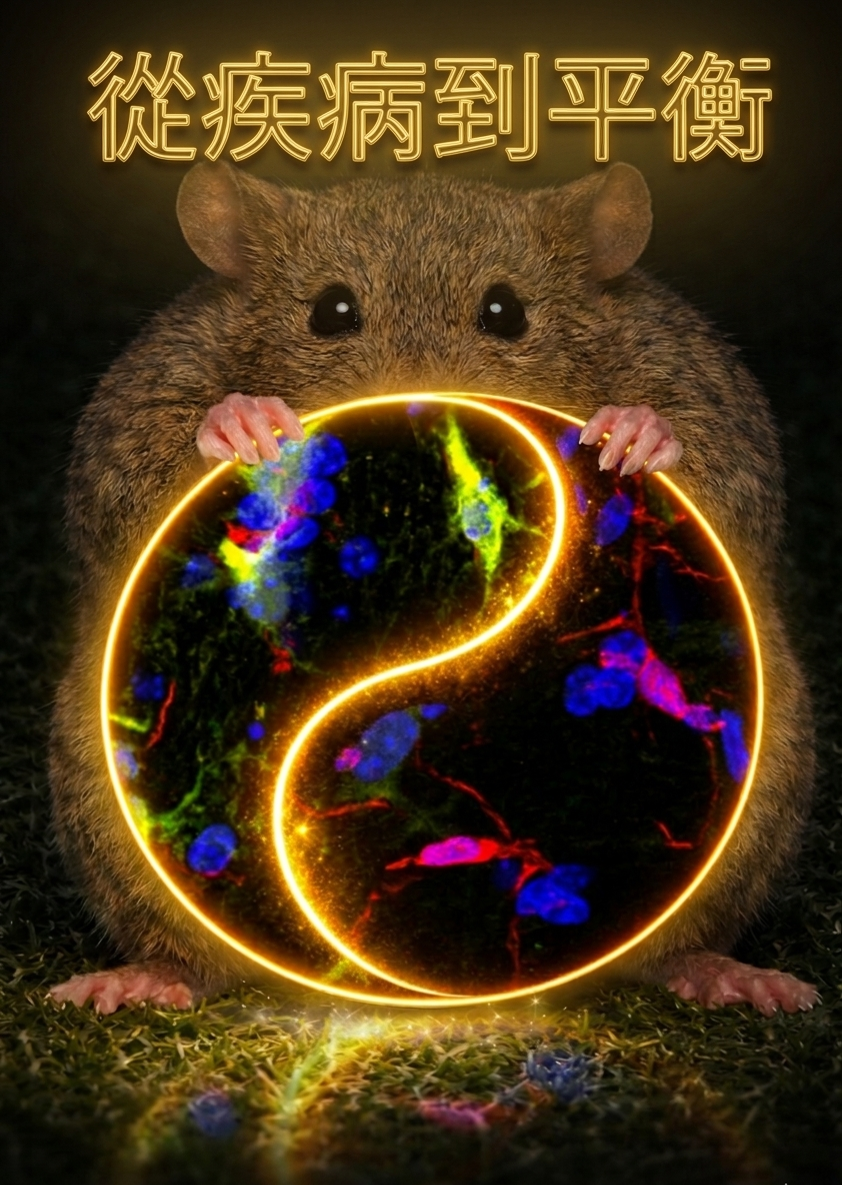 The yin-yang symbol represents the transition of the brain in Huntington’s disease from imbalance to balance due to drug treatment. On the left are the inflamed microglia, while on the right are the microglia that have returned to a normal state after treatment. Photo credit: Academia Sinica.

-
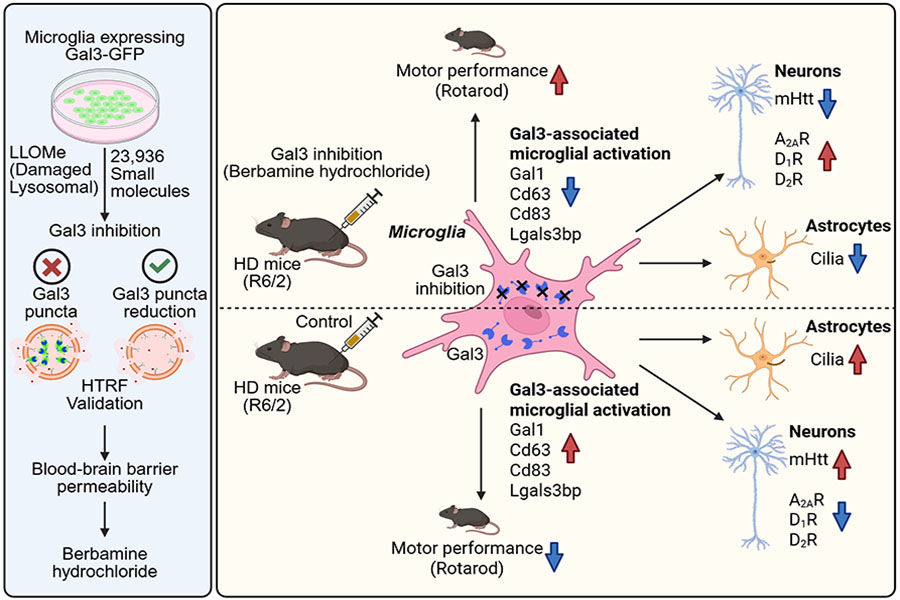 Blocking Galectin-3 in microglia reduces neuroinflammation and improves disease features in a preclinical model of Huntington’s disease, highlighting a promising therapeutic strategy. Photo credit: Academia Sinica.