


 Home
HomeDate: 2025-12-19
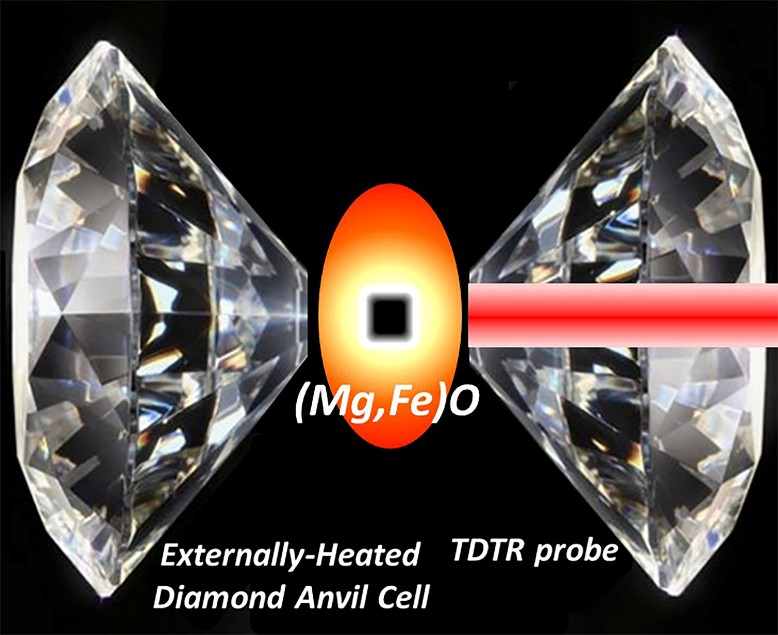
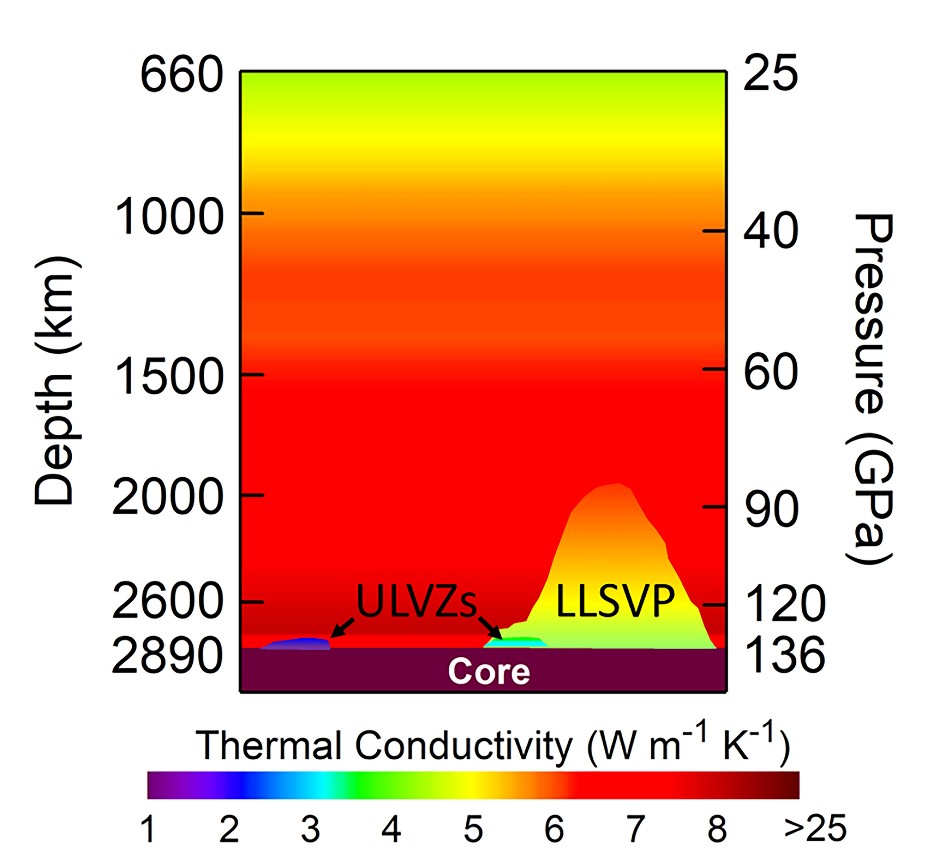
Seismic tomographic imaging has revealed numerous heterogeneous structures at Earth’s deepest mantle, ~2900 km depth under our feet. Of particular interest is the small patches of seismic ultralow velocity zones (ULVZs), extending only ~100 km wide and ~tens of km high, with anomalously lower velocity and higher density than the ambient mantle. The impacts of ULVZs on the thermochemical structures of mantle and core, and on geomagnetic evolution, however, remain poorly understood. Recently IES Dr. Wen-Pin Hsieh’s group has precisely determined an exceptionally low thermal conductivity of magnesiowüstite, a candidate constituent for ULVZs, at high pressure-temperature conditions. His team further demonstrated that such ultralow thermal conduction acts as a thermal blanket effect, suppressing heat transfer from the core into the mantle, significantly affecting regional heat flux, thermochemical structures and dynamics, as well as core’s thermal energy to operate the geodynamo. These exciting findings highlight the important roles that the small-scale ULVZs play on the complex, enigmatic geophysical and geodynamical features at both sides of core-mantle boundary. The coauthors include Dr. Frédéric Deschamps and Mr. Yi-Chi Tsao of IES, and Prof. Susannah Dorfman of Michigan State University, USA. These results are recently published in Nature Communications.
-
Link