

 首頁
首頁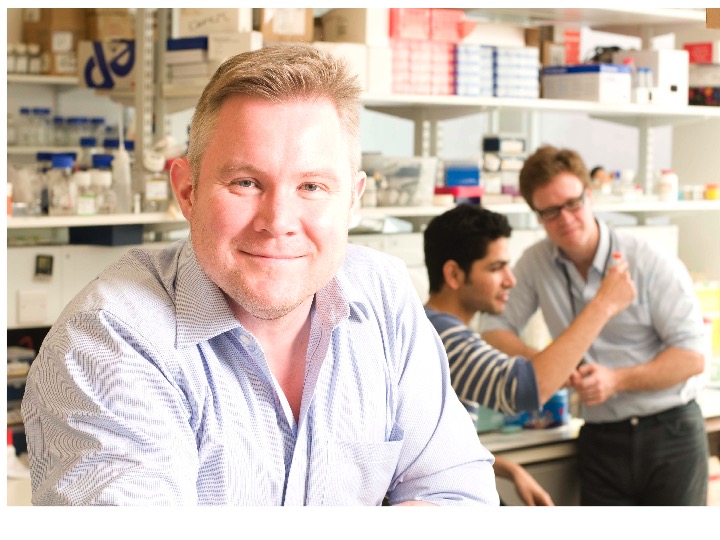
- 演講或講座
- 生物醫學科學研究所
- 地點
生醫所地下室B1B演講廳
- 演講人姓名
Dr. Derek Gilroy (Univ. College London)
- 活動狀態
確定
- 活動網址
2026-09-03 14:00 - 15:00

What I’m going to talk about in my lecture is a pathway that we knew relatively little about in human inflammation, namley the cytochrome P450 epoxy-oxylipin pathway.
We used our human model of resolving inflammation, where we inject UV-killed E. coli into the skin of healthy volunteers and then follow the inflammatory response from onset through to resolution.
What we found was that the enzymes responsible for producing epoxy-oxylipins increase during inflammation, with these lipids becoming particularly prominent around the transition into resolution.
We then manipulated this pathway pharmacologically by inhibiting soluble epoxide hydrolase, or sEH, using GSK2256294. This increases two epoxy-oxylipins in particular — 12,13-EpOME and 14,15-EET.
Interestingly, we didn’t simply suppress inflammation. Redness, heat and swelling were largely unchanged, although pain resolved more quickly. What really stood out was a striking reduction in intermediate monocytes, both in the circulation and subsequently in the inflamed tissue.
We then asked what is the mechanism?
And this led us to 12,13-EpOME. We found that 12,13-EpOME inhibits p38 MAP kinase and, in doing so, blocks the transition of classical monocytes into intermediate monocytes. Importantly, we could reproduce this in humans using the p38 inhibitor losmapimod.
So, the key message from this work is that resolution isn’t simply about switching inflammation off. Lipid mediators can actually determine immune-cell fate.
And the pathway I’d like you to keep in mind is: sEH, to 12,13-EpOME, to p38 MAPK, to monocyte differentiation. This potentially gives us a completely new way of manipulating inflammatory resolution in humans.