Institute of History and Philology

Academia Sinica began planning to establish the Institute of History and Philology at Canton's Chung-shan University in March 1928. Professors Fu Ssu-nien, Ku Chieh-kang, and Yang Chen-sheng were invited to serve as the planning committee. The Institute was officially established in July of the same year, moving into Canton's Po-yuan on October 22, 1928. The Instituteaccompanied Academia Sinica in its move to Peking in 1929. At the same time,Professors Tschen Yin-koh, Chao Y.-R. and Li Chi were appointed as chairmen of the History, Linguistics, and Archaeology Sections, respectively. Following the Mukden Incident of September 18, the Institute moved again, this time to Shanghai. In 1934, it moved to Nanking, and the Anthropology Section was established. Due to the Sino-Japanese War and the fall of Nanking,the Institute moved three more times: first to Changsha in Hunan, then to Kunming in Yunnan, and finally to Lichuang, Nan-hsi County, Szechwan. Following the war's victorious conclusion, the Institute returned to Nanking in the winter of 1946. During the winter of 1948, under the direction of Professor Fu Ssu-nien, the Institute moved from Nanking to Taiwan, temporarily setting up quarters in Yangmei, Taoyuan County. In 1954, the Institute moved to its current location in Nankang. In 1958, the Office of Oracle Bone Research was added, which became the "Fifth Section" (Chinese Writing Systems) in 1990.

The first director of the Institute was Professor Fu Ssu-nien. Following his decease in December 1950, he was succeeded by Professor Tung Tso-pin. WhenProfessor Tung accepted a position as professor at Hong Kong University in August 1955, he resigned directorship and was succeeded by Professor Li Chi.Professor Li completed his term in December 1972; Professor Ch'u Wan-li was appointed to succeed him. Due to poor health Professor Ch'u resigned from his position and was succeeded by Professor Kao Ch'u-hsun in July 1978. Professor Kao completed his term in July 1981; the deputy director Ting Pang-hsinbecame acting director the following month. In March 1985, Professor Ting was formally appointed as director of the Institute. When Professor Ting accepted a position as professor at the University of California at Berkeley, he resigned directorship in March 1989, and was succeeded by Professor Kuan Tung-kuei in April 1989. After Professor Kuan completed his second term, present director Professor Tu Cheng-sheng started his tenure from April 1995.

RESEARCH

The Institute is committed to achieving its goal of undertaking research on East Asia in a scientific manner, by developing new source materials and using new research methodologies. It is divided into a total of five sections covering five specific fields: History, Linguistics, Archaeology, Anthropology, and Chinese Writing Sys-tems. Moreover, in July 1995 the Institute established nine special research groups to encourage cooperative research within its walls: State and Society, History of Thought and Culture, Images and Artefacts, Linguistic Research, Documents and Language Materials, South-East Asian Archaeology, Ecology and Archaeology, History of Daily Life and Ritual Practice, and Chinese Writing Systems.

Organization and conservation of Ming and Ch'ing dynasty documents.

SECTION 1 (HISTORY)

This section places emphasis on both the collection of materials and the pursuit of research. Previously, individual researchers concentrated on the study and emendation of canonical works, on general history, history of religion, social and economic history, ancient peoples and ancient geography, ancient art, calendrical methods, history of science, writing systems, and commentaries. In recent years, interest has moved toward topics such as political systems, thought and culture, economy and society, learning, and law, in all periods of Chinese history, from pre-Ch'in through the Ming and Ch'ing dynasties.

SECTION 2 (LINGUISTICS)

Apart from continuing the description and historical study of the different ethno-linguistic groups and dialects within China's borders, the Linguistics Section has in recent years taken up topics like typology, language (dialect) confrontation, and theoretical investigation of migration. Moreover, because of the highly interdisciplinary nature of modern linguistics, this section dedicates major efforts to the exploration of new fields that combine with life sciences and computer science, such as neuro-linguistics, experimental linguistics, and statistical linguistics, as well as grammatical research, the backbone of linguistic theory.

SECTION 3 (ARCHAEOLOGY)

The Archaeological Laboratory

Apart from continuing to organize the archaeological materials excavated at An-yang, this section develops archaeological research in Taiwan both to help us understand the migration and adaptation of Han-Chinese people and culture to Taiwan, and to attempt to establish Taiwan's identity in the context of Pacific Rim archaeology. Besides these topics, art-historical archaeology, ethno-archaeology, geological archaeology, and ecological archaeology also rank among the fields covered by this section. In recent years, the Archaeology Section has endeavored to assist the government in protecting cultural monuments. It also cooperates with various South-East Asian countries in archaeological investigations.

SECTION 4 (ANTHROPOLOGY)

While historical anthropology constitutes the main area of current research in this section, new developments assert themselves in methodology and in categories of research. All research emphasizes the combination of historical and anthropological methodologies, using historical materials and field data to pursue research in topics such as ethnic history, history of religion, social history, history of science and technology, and history of daily life and ritual practice.

SECTION 5 (CHINESE WRITING SYSTEMS)

The research undertaken by members of this section centers on oracle bones. In addition, they pursue epi-graphical research to trace both the origins of Chinese characters and the patterns of their subsequent development. They also investigate the Shang political system, geography, and culture, as well as pre-Ch'in history, phonology, commentaries, and archaeology. In years to come, the Institute will maintain its goal of contributing to scientific research in East Asian studies. Each section attempt to utilize new materials and metho-dologies to establish new areas of systematic knowledge in its field. The Institute will emphasize research in the following three areas:

PERSONNEL AND FACILITIES

PERSONNEL

The Institute has 35 research fellows, 7 correspondence research fellows, 11 adjunct research fellows, 20 associate research fellows, 3 assistant research fellows, 13 research assistants, 3 technicians, and 16 administrative employees, adding up to a total of 108 members.

FACILITIES

Laboratory for the Restoration and Conservation of Bronze Objects

The Institute has an exhibition hall, a library, a phonetics laboratory, an archaeological laboratory, computer rooms, and other facilities. The exhibition hall displays mainly historical documents and archaeological artefacts. The historical documents include materials from the Institute's collection, such as oracle bone inscriptions, epigraphic rubbings, rare books, Han-dynasty wooden slips, central- government documents of the Ming-Ch'ing period, and documents and pictorial materials of Chinese minority peoples. The archaeological dating from the New Stone Age, the Shang dynasty, Western Chou, the Warring States period, and the Han, T'ang, and Sung dynasties. A certain number of objects in the Institute's possession belong to the legacy of the French collector Gabriel de Mortillet. Taiwanese archaeology has also accumulated a significant amount of materials.

The Rare Book Room of the Fu Ssu-nien Library

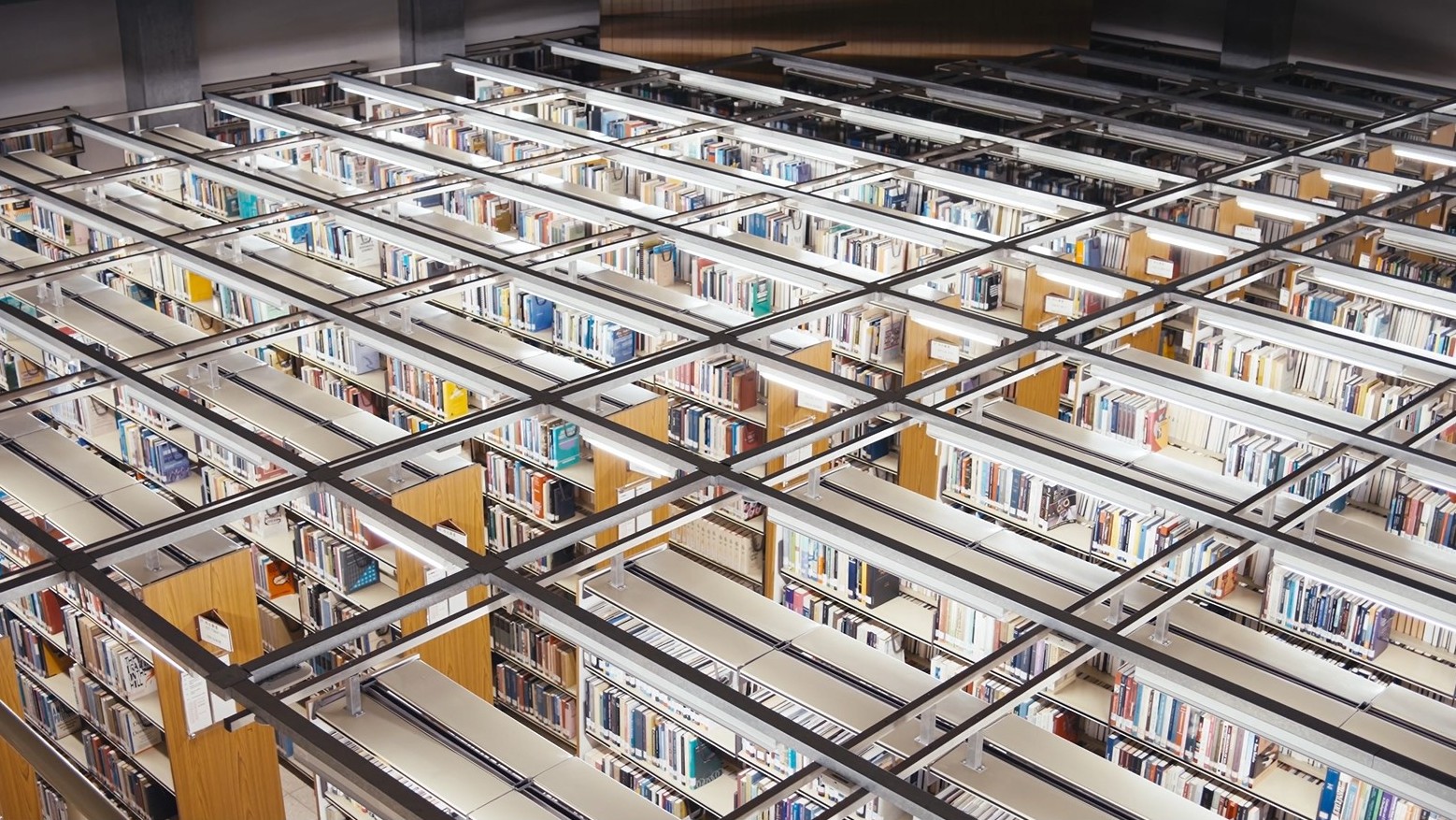
The library houses some 42,000 volumes of Chinese rare books and over 140,000 regular string-bound volumes; a special collection of 25,000 books from the Chinese mainland; 294,000 Chinese, Korean, and Japanese books; 40,000 books in Western languages; 3,200 periodicals from China and abroad; 3,200 reels of microfilm; 27,000 rubbings; 9,900 volumes of folk drama; and 300,000 Ch'ing government documents. In order to facilitate the cataloguing and preservation of these materials, the library has installed an automated management system and produced CD-ROM files for rare books. It has also set up a special fumigation facility and a Wang Integrated Image System.

Mounting of the Collection of Rubbings

The phonetics laboratory is equipped with a SUN SPARC 10 workstation and a Kay Sona Graph system. The archaeological laboratory is equipped with high-temperature X-ray diffractometers, electron microscopes, and an automatic splicer. Computer facilities include six workstations, a Novell router, a server, a CD-ROM server, a Hub concentrator, and over 100 PCs. The Institute also possesses an infrared system to improve the handling of wooden slips, books, and images.

MAJOR RESULTS OF RESEARCH

The research of the Institute of History and Philology takes two different forms: individual specialized topics and collectively planned projects. The Institute also regularly organizes academic conferences and international symposia. In the past two years the following important results have been achieved:

HISTORY

Individual members of the Institute have continued to publish articles in fields such as political history, social history, economic history, intellectual history, legal history, and organizational history. The special projects "Ch'ing Politics and Culture" and "Family and Society in Sung China" have been completed. The section also organizes, in yearly rotation with Section 4, a "Historical Symposium" to explore new topics in historiography and to instruct graduate students of different universities.

LINGUISTICS

Apart from actively training talented researchers in Austronesian and Altaic languages and developing research on Tibeto-Burman languages, the section has completed the following special projects over the past two years: Austronesian linguistics and research in pre-historic culture; survey of Chinese dialects in Taiwan (fourth and fifth years); collection of modern standard Mandarin language materials (first year); survey of languages belonging to the Tibeto-Burman language family (first year); phonetic changes in the speech of Chinese Parkinson patients; survey of languages spoken in South-East Asia (first year); collection and investigation of ancient Chinese vocabularies and their structure; and a survey of the Paiwan language.

ARCHAEOLOGY

Historical archaeology of China: active engagement in the organization and publication of the Institute's collection of artefacts from the Shang tombs at An-yang, as well as from other sites in mainland China.

Taiwanese archaeology: continuation and completion of research on the Pacific archipelagos of Tungsha and Nansha, the Po-gung mound, the factory construction site at Ho-neng, the Hsin-shih Science Park, the Cowry Tomb at Hsiao-hsi in Kao-hsiung, Green Island, Kuei-shan, and other sites, and a general survey of sites in Taiwan and Fukien (third year).

Preservation: international research project on the pre-servation of Chinese archaeological artefacts.

Art and archaeology: completion of historical research on High-T'ang Buddhist art (second year), and the organization of materials concerning the history of Taiwanese art.

South-East Asian archaeology: completion of the survey planned for the first year.

ANTHROPOLOGY

Continued exploration of previous topics such as historical-anthropological research into the origins and development of the Chinese people and of ancient Chinese society and culture, and important new directions in the study of aspects such as perception of life, views on death, women's history, religion and ritual, and sickness and cures. Completed research projects include research on the Shang bronzes in the collection of the Museum of Far Eastern Antiquities, Stockholm, the collection and analysis of oral history materials concerning the collective history of the Taiwanese people (in cooperation with Section 1), a study of ancient Chinese numerology, the collection and analysis of morality books currently in use in Taiwan, and periodic presentations on "Sickness, Cures, and Culture."

CHINESE WRITING SYSTEMS

This section has recently published two collections of archaeological reports: Shang Dynasty Inscriptions, Section B (second edition, three volumes) and Supplement to Section B.

In the project of organizing the unpublished oracle bone inscriptions in the Institute's collection, all rubbings have been made and the production of photographs and printing plates is presently under examination.

Punctuation and emendation continue in the project of revising the collected glosses on the oracle bone in-scriptions, and the results are compiled in a database; a systematic overview of language usage in the oracle bone inscriptions is in progress.

The comparative study of the Warring States wooden slips from the states of Ch'u and Ch'in proceeds with the establishment of a database of pre-Ch'in wooden slip texts and a genealogy of characters that makes possible the investigation of actual examples.

COLLECTIVE ORGANIZATION OF MATERIALS

Already close to three hundred volumes of Ming and Ch'ing documents have been published, and currently an image file is under construction that will allow researchers to search and read this collection on-line. In the automation of Sinological materials, thirty-nine works have been typed into the database, including the standard texts of the Twenty-five Histories and the Thirteen Classics, making a total of over 60 million characters. In its early days, the database counted 4.5 million characters. The commentaries on 1,109 unpublished Han-dynasty wooden Slips from Edsin Gol have been completed and they will be published, with illustrations, in Han-Dynasty Wooden Slips from Edsin Gol, A Supplement. A database of inscriptions and of texts written on wood and silk, and a related computer guide, are in preparation. The project in charge of organizing visual historical materials has already organized 5,700 previously uncatalogued rubbings from the Institute's collection and has mounted 1,500 of these rubbings. Of the Collection of Annotated T'ang-Dynasty Funerary Inscriptions eighteen volumes have already appeared. Moreover, epigraphs are being collected for a complete database of inscription materials. A catalogue of the "Documents of Fu Ssu-nien" is now available and there are plans for the compilation of a posthumous collection of Fu SSu-nien's writings and the publication of a selection from his correspondence. In the Chinese archaeology database project, the 1991 Yearbook of Chinese Archaeologyhas been completed.

PUBLICATIONS

In the past two years, the Institute published eight works: seven mongraphs and one conference volume. It has also reprinted three monographs.


RESEARCH STAFF


NameResearch Speciality
Research Fellow Director
Tu, C.S. Ancient Chinese social history, Etno-cultural history of ancient China
Research Fellow and Deputy Director
Huang, K.C.Sung history
Research Fellows
Chen, P. Ancient Chinese history, Ch'in-Han history
Shih, C.J. Yin-Shang archaeology, Ancient Chinese history
Chang, Y.J.Spring-Autumn history, Textual criticism
Kuan, T.K. Ch'in-Han History, History of China's border peoples
Mao, H.K. Medieval Chinese social history
Chen, C.L. History of Central Asia
Li, Paul J.K. Austronesian linguistics, Chinese dialectology
Chang, W.J.Chinese legal history
Gong, H.C. Tangut linguistics, Chinese dialectology
Sang, H.Y. Cultural history of China's southwestern border peoples
Ho, D.A. Chinese phonetics, Chinese dialectology
Hsing, I.T.Ch'in-Han history
Chuang, S.C. Chinese art and cultural history
Hung, C.F. Yuan history
Tsang, C.H.Prehistoric archaeology, Historical archaeology
Tseng, C.Y.Experimental linguistics, Psycho-linguistics
Huang, C.H.Chinese and Western intellectual history
Poo, M.C. Ancient Chinese religion
Liu, P.Y. Han political and institutional history
Chu, H.L. Ming intellectual history
Liu, S.F. Six Dynasties history, Chinese urban history
Hsiao, F. Ch'in-Han History
Huang, C.L.T'ang History
Jung, B.S. Oracle bones Epigraphy
Shih, S.C. Chinese art history
Huang, C.R.Computation linguistics, Chinese grammar
Liu, C.Y. Ming-Ch'ing social history
Lau, N.Y. Sung history
Kang, L.Northern Wei political and cultural history
Yen, C.Y.Chinese art and archaeology
Lao, K.Ch'in-Han history
Chuan, H.S.Modern Chinese economic history
Chang, K.Sino-Tibetan linguistics and Chinese dialectology
Associate Research Fellows
Lin, S.C.Warring States paleography
Chen, C.Y.Prehistoric archaeology, Taiwan archaeology
Ho, H.W.Modern Chinese economic history
Liu, T.K.Ch'in, Han and Six Dynasties social history
Lin, Y.C.Tangut linguistics, Chinese phonology
Sung, K.Y.Popular religion
Yue, C.C.Ming history
Liu, I.C.Settlement archaeology, Taiwan archaeology
Wei, P.C.Historical Chinese grammar
Chen, H.S.Chinese textual criticism and Ch'ing thought
Wang, F.S.Ming-Ch'ing and modern intellectual and cultural history
Lu, C.L.T'ang history
Wang, M.K.Ancient Chinese ethnology
Chen, J.S.History of Chinese thought, T'ang history
Sun, Jackson T.S.Tibeto-Burman linguistics
Lapolla, Randy J.Sino-Tibetan linguistics
Tang, C.C.Jane Chinese grammar, Linguistic theory
Tsai, C.M.Oracle bones
Lin, F.S.Epigraphy Ancient, Chinese religious history, and epidemic history
Chen, Y.M.Ethno-archaeology
Assistant Research Fellows
Lee, J.D.Chinese legal history,Women's history
Chu, P.Y.History of Sino-Western contact and history of science
Kieschnick, John H.Social history of Medieval Buddhism
Research Assistants
Wang, D.H.Physical anthropology
Chen, Y.S.History of Chinese paleography
Chiu, M.Y.Taiwan archaeology
Chen, K.T.Scientific archaeology
Chen, C.Z.Ancient paleography
Chao, J.H.Hu Shih thought
Li, C.M.History of Ch'in-Han customs
Chen, W.C.Prehistoric archaeology, Behavioral archaeology
Li, K.T.Settlement archaeology, Eco-archaeology
Hsian, S.Y.Altaic linguistics
Zeitoun, Elizabeth S.Austronesian linguistics
Lin, C.Y.Archaic paleography
Li, Z.K.Archaic paleography

MEMBERS OF THE ADVISORY COMMITTEE

(April 1, 1994 - March 31, 1997)
Ting, P.H.Linguistics
Professor, UC Berkeley
Lao, K.History
Professor, UCLA
Yen, K.W.History
Professor, New Asia Institute, H.K.
Chang, K.C.Archaeology
Professor, Harvard University
Hsu, C.Y.History
Professor, University of Pittsburgh
Chuan, H.S.History
Research Fellow, IHP
Huang, C.C.History
Correspondence Fellow, IHP
Sung, W.S.Archaeology
Professor, National Taiwan University
Tao, C.S.History
Professor, University of Arizona
Tu, C.S.History
Director of IHP