President and Vice Presidents
Organization
Convocation
Council
Central Advisory
Committee
Institutes
Research Staff
Budget
Recently Progress
Future
Academia Sinica, founded in 1928, is the most prominent
academic institution in the Republic of China. While affiliated directly to the
Presidential Office of R.O.C., Academia Sinica enjoys independence and autonomy in
formulating its own research objectives. Its major tasks are to undertake in-depth
academic research on various subjects in the sciences and humanities, and to provide
guidelines, channels of coordination, and incentives with a view to raising academic
standards in the country.
In recent years, under the leadership of President Yuan T. Lee, Academia Sinica has been transformed into a modern research institution. Many of the 25 research institutes are now headed by world-class scholars and staffed by highly-trained, motivated, and creative young investigators. Major strides have also been made toward raising the standards of academic research, and Academia Sinica is presently positioning itself to move its research activities to the international level. Aside from placing greater emphasis on opening up new areas of intellectual endeavors, Academia Sinica is also taking a leadership role to launch new initiatives in the applied areas to meet the broad spectrum of societal needs within Taiwan.
Towards fulfilling these goals, Academia Sinica has adopted various measures to promote internal integration of research activities in the three research disciplines (mathematics and physical sciences; life sciences; and humanities and social sciences); to help with the planning, implementation, and evaluation of long-term projects in order to enhance the impact of the research activities; to harness basic research results for applications and technology transfer; to engage the academic and research community within Taiwan toward a modern and forward-looking collective academic vision; to cultivate an intellectual environment that is conducive to the nurturing of young scholars and the recognition of outstanding scholarship in Taiwan; and to promote international cooperation and scholarly exchanges that will accelerate the overall development of academic research in Academia Sinica and the Republic of China.
President and Vice Presidents 
The current President of Academia Sinica is Dr.Yuan-Tseh Lee, a Nobel laureate in
chemistry in 1986, who was inaugurated on Jaunary 15,1994, with Dr.
Michael M. C. Lia and
Dr. Ts'ui-jung Liu and Dr. Ovid J.
L. Tzeng serving as Vice Presidents. President Lee also chairs the Assembly and the
Council of Academia Sinica. Their personal c.v. are as follows:
B.S., June 1959, National Taiwan University, Taiwan
M.S., June 1961, National Tsing-Hua University, Taiwan
Ph.D., June 1965, Department of Chemistry, University of California, Berkeley
(Professor Bruce Mahan)
Postdoctoral Fellow, June 1965 - January 1967,
Department of Chemistry, and Lawrence Berkeley National Laboratory, University of
California, Berkeley (Professor Bruce Mahan)
Research Fellow, February 1967- September 1968,
Department of Chemistry, Harvard University (Professor Dudley Herschbach)
Doctor (Honoris Causa), University of Waterloo, Canada, 1986.
Doctor (Honoris Causa), Chinese Academy of Sciences, 1987.
Doctor (Honoris Causa), Chinese University of Hong Kong, 1989.
Doctor (Honoris Causa), Arizona State University, 1990.
Doctor (Honoris Causa), University of Rome, Italy, 1992.
Doctor (Honoris Causa), University of Southern California, Los Angeles, 1993.
Doctor (Honoris Causa), Cheng Kung University, Tainan, Taiwan, 1994.
Doctor (Honoris Causa), Hong Kong Baptist University, Hong Kong, 1994.
Doctor (Honoris Causa), Providence University, Taiwan, 1995.
Doctor (Honoris Causa), University of Maryland, 1996.
Doctor (Honoris Causa), International Tech. University, San Jose, CA, 1996.
Doctor (Honoris Causa), Ritsumeikan University, Japan, 1997.
Doctor (Honoris Causa), Shizuoka University, Japan, 1997.
Doctor (Honoris Causa), National Sun Yat-Sen University, Taiwan, 1997.
Doctor (Honoris Causa), National Chiao Tung University, Taiwan, 1997.
Doctor (Honoris Causa), Hong Kong University, Hong Kong, 1998.
Doctor (Honoris Causa), University of Louis Pasteur, Strasbourg, France, 1998.
Doctor (Honoris Causa), National Tsing-Hua University, 1999
Doctor (Honoris Causa), Washington University in St. Louis, 2000.
-
Fellowships & Awards:
Alfred P. Sloan Fellow,
1969-71.
Camille and Henry Dreyfus Foundation Teacher Scholar Grant Recipient 1971-74.
Fellow, American Academy of Arts and Science, 1975.
Fellow, American Physical Society, 1976.
John Simon Guggenheim Fellow, 1976-77.
Member, National Academy of Sciences, 1979.
Academician, Academia Sinica, Taiwan, 1980.
Miller Professorship, University of California, Berkeley, California, 1981-82.
Ernest O. Lawrence Award, U.S. Department of Energy, 1981.
Sherman Fairchild Distinguished Scholar, California Institute of Technology, Pasadena,
California, 1983.
Harrison Howe Award, Rochester Section, American Chemical Society, 1983.
Peter Debye Award of Physical Chemistry, American Chemical Society, 1986.
National Medal of Science, White House, USA, 1986.
Nobel Prize in Chemistry, 1986.
Golden Plate Award, American Academy of Achievement, 1987.
Achievement Award, CEASAC, 1987.
The Michelson Award, Museum of Science Industry, Chicago, Illinois, 1987.
The 1987 Minnie Rosen Award for High Achievement, Ross University, 1987.
Fellow, American Association for the Advancement of Science, 1988.
Corresponding Member, Gottingen Academy of Sciences, West Germany, 1988.
Alumnus of the Year, California Alumni Association, University of California, Berkeley,
California, 1988.
External Member, Max Planck Institute fur Stromungsforschung, Gottingen, West Germany,
1988.
Visiting Professor, University of Perugia, Perugia, Italy, 1989.
Tsin Kaiyin Distinguished Professor, National Taiwan University, Taipei, Taiwan, 1991.
Faraday Medal, Royal Society of Chemistry, London, Great Britain, 1992.
Fellow, Third World Academy of Sciences, 1994.
The Honorary Member, International Academy of Sciences, 1994.
Distinguished Accomplishment Award, Chinese Chemical Society, Taipei, Taiwan, 1995.
The Honorary Foreign Member, The Korean Academy of Science and Technology, 1995.
Distinguished Anniversary Fellow, Australian National University, Canberra, Australia,
1996.
The Honorary Foreign Member, Indian National Science Academy, 1997.
The Clark Kerr Award, University of California at Berkeley, 1999.
-
Academic Position:
Assistant Professor of Chemistry, The James Franck Institute and Department of
Chemistry, University of Chicago, 1968-71.
Associate Professor of Chemistry, The James Franck Institute and Department of Chemistry,
University of Chicago, 1971-72.
Professor of Chemistry, The James Franck Institute and Department of Chemistry, University
of Chicago, 1973-74.
Professor of Chemistry, Department of Chemistry, University of California, Berkeley,
1974-91.
University Professor, University of California, California, 1991-94, Emeritus, 1994.
Graduate Professor, University of California, Berkeley, California, 1994-97.
Principal Investigator, Chemical Sciences Division, Lawrence Berkeley National Laboratory,
1974-97.
Distinguished Research Fellow, Institute of Atomic and Molecular Sciences, Academia
Sinica, 1994 - present.
President, Academia Sinica, Taipei, Taiwan, 1994 - present.
HONORARY PROFESSORSHIP:
Honorary Professor, Institute of Chemistry, Chinese Academy of Science,
Beijing, China, 1980.
Honorary Professor, Fudan University, Shanghai, China, 1980.
Honorary Professor, Chinese University of Science and Technology, Hofei, China, Anhuei,
China, 1986.
Honorary Professor, Nanjing University, Nanjing, China, 1987.
Honorary Professor, Nankai University, Tientsin, China, 1987.
Honorary Director, National Laboratory for Chemical Kinetics and Reaction Dynamics, Dalien
and Beijing, China, 1987.
Honorary Professor, Beijing University, Beijing, China, 1988.
Honorary Professor, Xiamen University, Xiamen, China, 1988.
Honorary Professor, Fuzou Institute for the Structure of Matters, Fuzou, China, 1988.
Honorary Professor, Bilkent University, Ankara, Turkey, 1993.
Honorary Professor, National Taiwan University, Taipei, Taiwan, 1994.
-
LECTURESHIPS:
3M Lecturer, University of Minnesota,
1973.
JSAP (Japan Society of Advancement of Science) Senior Lecturer, 1977.
Philip Lecturer, Haverford College, 1978.
Coover Lecturer, Iowa State University, 1979.
Falk-Plaut Lecturer, Columbia University, 1980.
Kuhn Lecturer, Johns Hopkins University, 1981.
Harkins Lecturer, University of Chicago, 1981.
Kolthoff Lecturer, University of Minnesota, 1983.
FMC Lecturer, Princeton University, 1983.
Gilbert Newton Lewis Memorial Lecture, University of California, Berkeley, 1984.
Arthur Davidson Lecturer, University of Kansas, Lawrence, Kansas, 1987.
Sir Run Run Shaw Distinguished Lecturer, State University of New York, Stony Brook, New
York, 1987.
DeWitt Wallace Distinguished Visitor, MacAlester College. St. Paul, Minnesota, 1987.
Distinguished Visiting Professor, University of Florida, Gainesville, Florida, 1988.
Mack Memorial Award Lecturer, Ohio State University, Columbus, Ohio,
Leland Haworth Lecturer, Brookhaven National Laboratory, 1988-90.
Imperial Oil Lecturer, University of Western Ontario, London, Canada, 1989.
Kistiakovsky Lecturer, Harvard University, Cambridge, Massachusetts, 1989.
The Coblentz Society Speaker, 37th Annual Western Spectroscopy Conference, Asilomar,
California, 1990.
The Frederic J. Robbins Lecturer, Pomona College, Claremont, California, 1990.
Distinguished Visiting Professor Lecturer, San Francisco State University, San Francisco,
California, 1990.
McDowell Lecturer, University of British Columbia, Vancouver, British Columbia, Canada,
1990.
Frontiers Lecturer, Case Western Reserve University, Cleveland, Ohio, 1990.
S. Town Stephenson Lecturer, Washington State University, Pullman, Washington, 1991.
Linus Pauling Lecturer, California Institute of Technology, Pasadena, California,1991.
Alstadt-Lord-Mark Chair Lecturer, Polytechnic University, Brooklyn, New York, 1991.
Gooch-Stephens Lecturer, Baylor University, Waco, Texas, 1991.
Hill Lecturer, Duke University, Raleigh, North Carolina, 1992.
Faraday Medalist Lecturer, Royal Society of Chemistry, London, Great Britain, 1992.
E. K. C. Lecturer, University of California, Irvine, California, 1992.
K.T. Lecturer in Science Policy, National Taiwan University, Taipei, Taiwan, 1992.
Faculty Research Lecturer, University of California, Berkeley, California, 1993.
Merck Lecturer, Hope College, Holland, Michigan, 1993.
J. T. Baker Lecturer, Columbia University, New York, 1993.
Eyring Lecturer, Arizona State University, Tempe, Arizona, 1993.
Lee Ka Shing Lecturer, Hong Kong University, Hong Kong, 1994.
Linus Pauling Lecturer, Indian Institute of Science, Bangalore, India, 1994.
DuPont Marshall Lecturer, University of Pennsylvania, Philadelphia, 1996.
Hilldale Lecturer, University of Wisconsin, Madison, 1997.
Flygare Lectureship, University of Illinois at Urbana, 1999.
2nd WSPC Nobel Laureate Public Lecturer Singapore, 1999.4.12
Tan Kah Kee Lecturer, Singapore, 1999.4.13
Chuan Lyu Lecturer, University of Cambridge, Cambridge, U.K., 2000.11.22
The K. L. Cheng Distinguished Lecturer, University of Missouri-Kansas City, Kanasas, USA, 2001.04.05
The Jo Tyler Lecturer, UMKC, Kansas, USA, 2001.04.05
EDITORIAL BOARD MEMBERSHIPS:
Member, Board of Editors of the Review of Scientific Instruments,
1969-71.
Associate Editor of Journal of Chemical Physics, 1975-78.
Editorial Board, International Journal of Chemical Kinetics, 1976-84.
Editorial Advisory Board, Laser Chemistry, 1982-.
Editorial Board, Journal of Energetics Materials, 1983-.
Advisory Board, Journal of Physical Chemistry, 1984-87.
Advisory Editorial Board, Chemical Physics Letters, 1986-.
Advisory Editorial Board, Chemical Physics, 1986-.
Member, Editorial Board, Science Spectra, 1994-.
Member, Editorial Advisory Board, International Joural of Molecular Sciences, 1999
Member, Editorial Advisory Board, Chem Phys Chem, 2000
Editor-at-large, The Chemical Record, 2000
OTHER EXPERIENCES:
Member, Chemistry Research Evaluation Panel, AFOSR, 1976-79.
Member, Visiting Committee for the Chemistry Department of the Brookhaven National
Laboratory, 1977-80.
Member, International Advisory Committee, International Molecular Beam Symposium, 1977-85.
Chairman, 1978 Conference on the Dynamics of Molecular Collisions, Asilomar, California,
June 1978.
Member, Program Committee, International Conference on Rarefied Gas Dynamics, France,
1978.
Member, U.S. Pure and Applied Chemistry Delegation to the People?/FONT>s Republic of
China, May-June 1978.
Member, NAS-NRC Committee on Atomic and Molecular Science, 1980-84.
Chairman, Advisory Committee, Institute of Atomic and Molecular Sciences, Academia Sinica,
Taipei, Taiwan, 1982-94.
Member, NAS-NRC Committee on Recommendations for the U.S. Army Basic Scientific Research,
1983-86.
Member, TRIUMF Experimental Evaluation Committee, 1983-85.
Member, Board of Directors, Synchrotron Radiation Research Center, Taipei, Taiwan, 1983-.
Member, NAS-NRC Steering Committee on the Scope of the China Exchanges Study, 1983-87.
Member, International Scientific Committee, International Colloquium on Recent Advances in
Molecular Reaction Dynamics, Aussois, France, June 1985.
Member, Visiting Committee, Department of Chemistry, Harvard University, 1986-92.
Member, NAS-NRC Steering Committee on Army Basic Research, 1987-88.
Member, NAS-NRC Panel for a Review of ONR Opportunities for Research in Energy Conversion,
1987-.
Co-Chair, Chancellor’s Advisory Committee on Asian American Affairs, University of
California, Berkeley, California, 1987-89.
Member, Welch Foundation Science Advisory Board, 1988-.
Member, Molecular Science Research Center Advisory Panel, Battelle Pacific Northwest
Laboratories, 1988-.
Member, Competitive Technology Advisory Committee, Assembly California Legislature,
1989-91.
Member, California Council on Science and Technology,1990-.
Member, Secretary of Energy Advisory Board, 1990-92.
Member, Board of Trustees, California Institute of Technology, 1990-.
Member, Board of Directors, Chiang Industrial Charity Foundation, Hong Kong, 1990.
Member, Visiting Committee, Department of Chemistry, Massachusetts Institute of
Technology, Cambridge, Massachusetts, 1990.
Member Board of Trustees, Chang Ron Fa Foundation, Taipei, Taiwan, 1991-.
Member, President’s Advisory Board, Hong Kong University of Science and Technology, Hong
Kong, 1991-92.
Co-Chairman, International Symposium on Molecular Beams, Asilomar, California, 1992.
Member Board of Trustees, Condensed Matter Research Foundation, Taipei, Taiwan, 1992-.
Chairman, Tan Kah Kee International Association, Hong Kong, 1992-.
Member, Visiting Committee, Department of Chemistry, State University of New York, Stony
Brook, 1992.
Chairman, Visiting Committee, Department of Chemistry, Harvard University, Cambridge,
Massachusetts, 1993.
Member, Board of Trustees, Chang Chao-Ting Foundation, Taiwan, 1994-.
Member, Board of Directors, National Palace Museum, Taipei, Taiwan, 1994-.
Member, National Science Council, Taipei, Taiwan, 1994-.
Member, Advisory Panel on Science and Technology, Executive Yuan, Republic of China,
1993-95.
Member, Board of Trustees, Yuan Tseh Foundation for Science Education, Taipei, Taiwan,
1994-.
Chairman, Board of Trustees, Foundation for the Advancement of Distinguished Scholars,
Taipei, Taiwan, 1994.
Member, Board of Trustees, National Health Research Institutes, Taipei, Taiwan, 1995.
Chairman, Educational Reform Council, Executive Yuan, Taipei, Taiwan, 1995-96.
Member, Board of Trustee, Taiwan Peace Foundation, 1997.
Chief Advisor, Science and Technology Assembly, Executive Yuan, ROC, 1998-.
Honorary Member, the Chemical Research Society of India, 2001
Member, Scientific Advisory Board of Epi Gen X Pharmaceuticals Inc, 2001.
- DR. Michael Ming-Chiao Lai
- Personal
NAME: Michael Ming-Chiao Lai
TITLE: Vice President, Academia Sinica
Distinguished Professor of Molecular Microbiology and Immunology, University of Southern California
PLACE OF BIRTH: Tainan, Taiwan, Republic of China
BUSINESS ADDRESS: Office of Vice President
Academia Sinica
128, Academia Road, Sec. 2, Nankang,
Taipei 115, Taiwan
Telephone: (02) 2789-9402
Facsimile: (02) 2785-3208
- Education
1968 M.D. Medicine National
Taiwan University College of Medicine,
Taiwan, Republic of China
1973 Ph.D. Molecular Biology
University of California, Berkeley, California
1973 Postdoctoral Molecular
Biology University of California, Berkeley, California
2003-present Distinguished Research Fellow and Vice President,
Academia Sinica
2001-present Distinguished Professor, University of Southern
California
1990-2003 Investigator, Howard Hughes Medical Institute
1988 Visiting Professor, Institute of Molecular Biology,
Academia Sinica, Taipei, Taiwan
1983-present Professor, Department of Molecular Microbiology
and Immunology (formerly Microbiology) and Department of Neurology, University
of Southern California, Keck School of Medicine, Los Angeles, California
1981-1983 Associate Professor, Department of Neurology,
University of Southern California School of Medicine, Los Angeles, California
1978-1983 Associate Professor, Department of Microbiology,
University of Southern California School of Medicine, Los Angeles, California
1973-1978 Assistant Professor, Department of Microbiology,
University of Southern California School of Medicine, Los Angeles, California
1968 M.D., Summa Cum Laude, National Taiwan University College
of Medicine, Taiwan, Republic of China
1985 USC Phi Kappa Phi Award for Scientific Work, Honorable
Mention
1986 International Scientist Fellowship from Japan Society for
the Promotion of Science
1987 American Society for Microbiology Foundation Lecturer
1987 National Multiple Sclerosis Society Established
Investigator
1989 Burlington Northern Foundation Faculty Achievement Award
for Outstanding Scholar
1990 Howard Hughes Medical Institute Investigator Award
1990 American Society for Microbiology, RNA Virus Divisional
Lecturer
1990 Society of Chinese Bioscientists in America, Cathay
General Hospital Award on Hepatitis Research
1992 Academician, Academia Sinica (National Academy of
Sciences), Taiwan
1994-95 American Society for Microbiology, Foundation Lecturer
1995 USC School of Medicine Excellence in Teaching Award,
Class of 1997
1995 Outstanding Alumnus Award (Inaugural), Tainan First High
School, Taiwan
1996 Chinese-American Faculty Association of Southern
California, Achievement Award
1997 Phi Tau Phi Scholastic Honor Society of America
1998 USC Associates Award for Creativity in Research and
Scholarship
2001 Distinguished Professor, University of Southern
California
2001 “Highly Cited Researcher”, Institute of Scientific
Information
2002 Hastings Foundation Professor, University of Southern
California
2002 Fellow, American Academy of Microbiology
Coronaviruses, hepatitis C virus and hepatitis delta virus
202 peer-reviewed publications and 50 invited reviews, book
chapters and editorials
- Dr. Ts'ui-jung Liu
- Personal
Name:
Ts'ui-jung Liu
Date of Birth: December 5, 1941
Place of Birth: Changhua, Taiwan - Education:
1963 B.A. Department of
History, National Taiwan University
1966 M.A. Graduate Institute of History, National Taiwan University
1970 M.A. Regional Studies: East Asia, Harvard University
1974 Ph.D. East Asian History and Languages, Harvard University
- Career:
1966/8-1968/8 Assistant Research Fellow,
Institute of History and Philology, Academia Sinica
1974/8-1978/10 Associate Research Fellow,
Institute of American Culture, Academia Sinica
1976/9-1977/6 Post-doctoral Fellow,
Population Studies Center, University of Pennsylvania
1977/9-1979/7 Associate Professor (part-time),
Department of History, Taiwan University;
Graduate Institute of History, Taiwan Normal University
1978/1-7 & 1979/1-7 Associate Professor (part-time),
Graduate Institute of Economics, Soochow University
1978/11-1979/7 Associate Research Fellow,
Institute of Economics, Academia Sinica
1979/8-2001/9 Research Fellow, Institute of Economics, Academia Sinica
1998/8-2001/9 Research Fellow and Director,
Institute of Taiwan History (Preparatory Office), Academia Sinica
2001/10-2003/11 Distinguished Research Fellow and Director
Institute of Taiwan History (Preparatory Office), Academia Sinica
1979/9-1980/7 Professor (part-time),
Graduate Institute of History, Taiwan Normal University
1980/11 Visiting Professor, Centre Chine,
Ecole des Hautes Etudes en Sciences Sociales, Paris
1984/1-12 Fulbright Fellow, Professorial Lecturer in Economic History
Georgetown University
1989/4-6 Visiting Professor, Department of History
University of California-Los Angeles
- Current Positions:
2003/10- Vice President, Academia Sinica
2001/10- Distinguished Research Fellow,
Institute of Taiwan History (Preparatory Office), Academia Sinica
1980/8- Professor, Department of History, National Taiwan University
(concurrent appointment with Academia Sinica)
Honor: 1996/7- Member of Academia Sinica
- Publications of Ts’ui-jung Liu
Books:
- Ts’ui-jung Liu (1969), The Problem of Fiscal Balance during the Shun-chih
and K’ang-hsi Reigns. Taipei: Chia-Hsin Cultural Foundation. 6+165 pages.
(in Chinese)
- Ts'ui-jung Liu (1980), Trade on the Han River and Its Impact on
Economic Development, ca.1800-1911, Institute of Economics,
Academia Sinica, Monograph Series, No. 16, Taipei: Institute of Economics,
Academia Sinica. 295 pages.
- Paul K. C. Liu and Ts’ui-jung Liu (1983), Studies on China’s
Population Problems, Taipei: Chung-yang wen-wu kung-ying she. 157 pages.
(in Chinese)
- Ts’ui-jung Liu (1992), Lineage Population and Socio-economic Changes
in the Ming-Ch’ing Periods. Economic Studies Series, No. 15, Taipei: The
Institute of Economics, Academia Sinica. xv+320 pages. (in Chinese)
Articles:
- Ts’ui-jung Liu (1967), “The Process of Taxation Exemption in the Shun-chih
and K’ang-hsi reigns during the early Ch’ing Period,” Bulletin of the
Institute of History and Philology, Academia Sinica, Vol.
37, Part 2, pp. 757-777. (in Chinese)
- Ts'ui-jung Liu (1970), "Dike Construction in Ching-chou," Papers on
China, Vol.23, pp. 1-28.
- Ts’ui-jung Liu (1975), “A Comparison on the Pattern of Cotton Textile
Factory in England and America,” American Studies, Vol.5, No.1, pp.
55-67. (in Chinese)
- Ts’ui-jung Liu (1975), “A Review on Researches in the New Economic
Hlistory of America in the past twenty years,” American Studies, Vol. 5,
No. 2, pp. 63-81. (in Chinese)
- Ts'ui-jung Liu and John C. H. Fei (1977), "An Analysis of the Land Tax
Burden in China, 1650-1865", Journal of Economic History, Vol. 37, No.
2, pp.339-381.
- Ts'ui-jung Liu and John C. H. Fei (1977), "Population Dynamics of
Agrarianism in Traditional China," in C. M. Hou and T. S. Yu (eds)., Modern
Chinese Economic History: Proceedings of the Conference on Modern Chinese
Economic History, Taipei: The Institute of Economics, Academia Sinica. pp.
23-53.
- Ts’ui-jung Liu (1977), “Recent Development in the Study of Historical
Demography in Europe and America,” American Studies, Vol. 7, No. 3,
pp. 79-97.
(in Chinese)
- Ts’ui-jung Liu (1978), “Specialization in Southern China during the Ming
and
Ch’ing Periods,” Ta-lu Tsa-chih, Vol. 56, No. 3&4, pp. 1-35. (in
Chinese)
- Ts'ui-jung Liu (1978), "Chinese Genealogies as A Source for the Study of
Historical Demography," Studies and Essays in Commemoration of the Golden
Jubilee of Academia Sinica, Taipei: Academia Sinica, pp. 849-870.
- Ts’ui-jung Liu and John C. H. Fei (1969), “Preliminary Study on the
Operation of the Ch’ing Granary System,” Academia Economic Papers, Vol. 7, No. 1,
pp. 1-29.
(in Chinese)
- Ts’ui-jung Liu (1980), “A Reappraisal on functions of the Granary System
during
the Ch’ing China,” Academia Economic Papers, Vol. 8, No. 1, pp. 1-29.
(in Chinese)
- Ts'ui-jung Liu (1981), "The Demographic Dynamics of Some Clans in the
Lower Yangtze Area, Ca. 1400-1900", Academia Economic Papers, Vol.
9, No.1, pp. 115-160.
- Ts’ui-jung Liu (1981), “Demographic Dynamic of Some Lineages in the Lower
Yangtze Area during the Ming and Ch’ing Periods,” Proceedings of
Academia Sinica’s International Conference on Sinology, Section on History
and Archaeology, Taipei: Academia Sinica, pp. 817-848. (in Chinese)
- Ts’ui-jung Liu (1981), “The Economy and the Industry in the Early
Republican Period,” Proceedings of Conference on National Building of the
Republic of China, Vol. 2, Taipei. pp. 71-100. (in Chinese)
- John C. H. Fei and Ts'ui-jung Liu (1982), "The Growth and Decline of
Chinese Family Clans," Journal of Interdisciplinary History, Vol. 12,
No. 3, pp.375-408.
- Ts’ui-jung Liu (1983), “The Development of Manufacturing Industry in
China, 1912-1928,” Academia Economic Papers, Vol. 11, No. 1, pp.
69-127. (in Chinese)
- Ts’ui-jung Liu (1983), “Population Increase and Migration in the Ming
and Ch’ing Periods: Examples from the Lineages in the Lower and Middle Yangtze
areas,” In Cho-yun Hsu, Han-kuang Mao and Ts’ui-jung Liu (eds.), Papers
from Seminar on Chinese Social and Economic History. Taipei: Resource and
Information Center for Chinese Studies, pp. 283-316.(in Chinese)
- Ts’ui-jung Liu (1983), “A Historical Analysis on the Development of
Science and Technology in Modern China,” Proceedings of Conference on the
Development of Culture, Science and Technology, Taipei: National Science
Council, pp. 21-42. (in Chinese)
- Ts'ui-jung Liu (1984), "The Problem of Food Supply in China,
1912-1927", Proceedings of the Conference on the Early History of the
Republic of China, Taipei: Institute of Modern History, Academia Sinica,
pp. 657-673.
- John C. H. Fei and Ts'ui-jung Liu (1985), "The Agrarian Land Structure
and Distribu tion: Priliminary Analysis on the Land Records of Kwangtung in
the 1930's", Academia Economic Papers, Vol. 13, No. 2, pp.
249-305.
- Ts'ui-jung Liu (1985), "The Demography of Two Chinese Clans in Hsiao-shan,
Chekiang, 1650-1850", in Susan B. Hanley and Arhtur P. Wolf (eds), Family
and Population in East Asian History, Stanford: Stanford University Press,
pp.13-61.
- Ts'ui-jung Liu (1985), "A Reappraisal of the Functions of the Granary
System in Ch'ing China (1644-1911), in Marceau Gast et al eds., Les
techniques de conservation des grains a long terme, Paris: Editions
du Centre National de la Recherche Scientifique, III, fasc 1, pp. 305-321.
- Ts'ui-jung Liu (1986), "Agricultural Changes and Population Growth: A
Brief Survey on the Case of China in Historical Perspective", Academia
Economic Papers, Vol.14, No.1, pp.29-68.
- Ts’ui-jung Liu (1986), “Demographic Aspects of Urbanization in the
Lower Yantze Region in China, ca. 1500-1900,’ Academia Economic Papers,
Vol. 14, No. 2, pp. 43-86. (in Chinese)
- Ts’ui-jung Liu (1987), “On the Growth and Functions of the Chinese
Lineage: An Example of Hsu Lineage from Hsiang-shan, Kwangtung,” Proceedings of the
Third Conference on Asian Clan Genealogies, Taipei: Center for
Chinese Studies Materials, United Daily News Cultural Foundation, pp. 369-416.
(in Chinese)
- Ts’ui-jung Liu (1988), “Customs Revenue and the Late Ch’ing
Self-Strengthening Movement,” Proceedings of the Conference on the
Self-Strengthening Movement in Late Ch’ing China, 1860-1894,
Taipei: Institute of Modern History, Academia Sinica, pp. 1005-1032. (in
Chinese)
- Ts’ui-jung Liu (1989), “Demographic Characteristics of Three Lineages
in Hopei,” Proceedings of the Fourth Conference on Asian Clan Genealogies,
Taipei: Center for Chinese Studies Materials, United Daily News Cultural
Foundation, pp. 61-98. (in Chinese)
- Ts’ui-jung Liu (1989), “The Growth of Huang Lineage in I-Huang, Kiangsi
and its Social-economic Activities,” Proceedings of Academia Sinica’s Second
International Conference on Sinology, Section on Ming, Ch’ing and Modern
History, Taipei: Academia Sinica, pp. 243-274. (in Chinese)
- Ts'ui-jung Liu (1990), "Features of Imperfect Competition of the Ming-Ch'ing
Salt Market", in Yung-san Lee and Ts’ui-jung Liu (eds)., China’s Market
Economy in Transition, Taipei: The Institute of Economics, Academia Sinica,
pp.259-327.
- Ts'ui-jung Liu (1990), "Demographic Aspects of Urbanization in the
Lower Yangzi Region of China, c. 1500-1900", in Ad van der Woude, Jan de Vries
and Akira Hayami (eds.), Urbanization in History: A Process of Dynamic
Interactions, Oxford: Clarendon Press, pp.328-351,
- Ts'ui-jung Liu (1991), "Rice Culture in South China, 1500-1900:
Adjustment and limitation in Historical Perspective," Bulletin of the
Department of History, National Taiwan University, No. 16, pp. 217-244.
- Ts’ui-jung Liu (1991), “Urbanization in Taiwan during the Past Eighty
Years,” Proceedings of Conference on Eighty Years History of the Republic
of China, 1912-1991, Taipei: Chin-tai Chung-kuo Ch’u-pan-she, Vol. 4, pp.
528-572, (in Chinese)
- Ts’ui-jung Liu (1992), “Marriage Pattern and Fertility of Some Lineages
in the Ming and Ch’ing Periods,” Papers on Society and Culture of Early
Modern China, Symposium Series of the Institute of History and Philology,
Academia Sinica, No. 1, pp. 315-385. (in Chinese)
- Ts'ui-jung Liu (1992), "Formation and Function of Three Lineages in
Hunan," Family Process and Political Process in Modern Chinese History,
Taipei: Institute of Modern History, Academia Sinica, pp. 327-375.
- Ts’ui-jung Liu (1992), “Chinese Concept of Wealth,“ Proceedings of
International Conference on Values in Chinese Societies, Taipei: Center
for Chinese Studies, pp. 705-720. (in Chinese)
- Ts’ui-jung Liu and Shi-yung Liu (1992), “Water Supply and Water Drainage:
a Study on the History of Settlement Environment on Taiwan,” Academia
Economic Papers, Vol. 20, No. 2, pp. 459-504. (in Chinese)
- Ts'ui-jung Liu (1992), "The Demography of Chinese Lineage Populations,
c.1300-1900", Discussion Paper 9217, The Institute of Economics, Academia
Sinica, pp.1-36, October 1992. A shorten version is included in
International Population Conference, Montreal, 1993. Vol.4, pp.119-138,
- Ts’ui-jung Liu (1993), “The Seasonal Pattern of Fertility and
Mortality: Evidences from the Chinese Lineage Populations in the Ming and
Ch’ing Periods,” Proceedings of the Sixth Conference on Asian Clan
Genealogies, Taipei: Center for Chinese Studies Materials, United
Daily News Cultural Foundation, pp. 183-234. (in Chinese)
- Ts'ui-jung Liu (1995), "A Comparison of Lineage Populations in South
China," in Stevan Harrell (ed.), Chinese Historical Micro-Demography,
Berkeley, Los Angeles, London: University of California Press, pp.94-120.
- Ts'ui-jung Liu (1995), "Demographic Constraint and Family Structure in
Traditional Chinese Lineages, ca.1200-1900," in Stevan Harrell (ed.),
Chinese Historical Micro-Demography, Berkeley, Los Angeles, London:
University of California Press, pp.121-140,
- Ts’ui-jung Liu (1995), “Han Immigration and the Settlement of Taiwan,” in
Ts’ui-jung Liu and Mark Elvin (eds.), Chi Chien So Chih: Papers on The
Environmental History of China, Taipei: The Institute of Economics,
Academia Sinica, pp. 295-347. (in Chinese)
- Ts'ui-jung Liu (1998), "Han Immigration and the Settlement of Taiwan:
the Onset of Environmental Change", in Mark Elvin and Ts'ui-jung Liu (eds.),
Sediments of Time: Environment and Society in Chinese History, New
York: Cambridge University Press, pp. 165-199.
- Ts’ui-jung Liu (1998), “City and Countryside,” in Chang Yu-fa (ed.),
The Social History of the Republic of China, Taipei: Academia Historica,
Chapter 5. (in Chinese)
- Ts’ui-jung Liu (1998), “A Preliminary Study on the Population and
Institution of Old Age in the Ch’ing Dynasty,” in Yen-ping Hao and Hsiu-mei Wei (eds.),
Symposium in Celebration of the Seventy-fifth Birthday of Academician
Kwang-ching Liu, Taipei: The Institute of Modern History, Academia Sinica, pp.
259-281.(in Chinese)
- Ts’ui-jung Liu and Shi-yung Liu (1999), “Disease and Mortality in the
History of Taiwan,” Tai-wan-shih yen-chiu (Taiwan Historical Research), Vol. 4,
No. 2, pp. 89-132. (in Chinese)
- Ts’ui-jung Liu (1999), “Old Age in Ch’ing Society,” in Chaonan Chen et
al. (eds), Emerging Social Economic Welfare Program for Aging in Taiwan in a World
Context, Taipei: The Institute of Economics, Academia Sinica, pp. 17-42.
- Ts’ui-jung Liu, (1999) “The Traditional Chinese Concepts and Institutions
on the Environment,” in Tien-wang Tsaur et al. (eds.), Economic Growth, Income
Distribution, and Evolution of Institution, Taipei: Sun Yat-sen Institute
of Social Sciences and Philosophy, Academia Sinica, pp. 1-42. (in Chinese)
- Ts’ui-jung Liu and Shi-yung Liu (2000), “A Preliminary Study on Taiwan’s
Forest Reserves in the Japanese Coloninal Period: A Legacy of Environmental
Conservation,” Tai-wan shih yen-chiu (Taiwan Historical Research),
Vol. 6, No. 1, pp. 1-34.
- Ts’ui-jung Liu (2001), “On the Function of Cooperative Granary in Taiwan,
1922-1942,” in Tsong-min Wu (ed.), Symposium in Memory of Professor Chang Han-
yu, Taipei: Foundation of Economic Research, National Taiwan
University, pp. 99-137.
- Ts’ui-jung Liu (2001), “A Preliminary Study on the Function of Taiwan’s
Cooperative Granaries in the Later Half of the Japanese Colonial Period,”
Tai-wanshih yen-chiu (Taiwan Historical Research), Vol. 7, No. 1, pp. 135-173.
(in Chinese)
- Ts’ui-jung Liu, (2001), “On the Function of Cooperative
Granary in Taiwan, 1922-1942,” in Symposium in Memorial of Professor Chang Han-yu,
Taipei: Economic Research Foundation of National Taiwan University, pp.
93-137.
- Ts’ui-jung Liu and Shi-yung Liu (2001), “Disease and Mortality in the
History of Taiwan,” in Ts’ui-jung Liu et al (eds.), Asian Population History,
Oxford: Oxford University Press, pp. 248-269.
- Ts'ui-jung Liu, (2002), "Regional Variation of Industrial Development in
Taiwan: An Overview," in Ts’ui-jung Liu and Shou-chien Shih (eds.),
Economic History, Urban Culture and Material Culture, Papers from the Third
International Conference on Sinology, Taipei: Institute of History and Philology,
Academia Sinica, pp. 225-264.
- Ts’ui-jung Liu, (2003), “The State and Problems in the Research of Taiwan
History,” in Hiyama Yukio (ed.), Modern Taiwan and Japan, Nagoya:
Chukyo University, pp. 67-78. (translated into Japanese by Chang Chin)
- Ts’ui-jung Liu (2003), “On the Study of Taiwan Environmental History,” in
Journal of Japanese Association of Taiwan Study, No. 5, pp. 176-195。(translated
into Japanese by Matsukane Kimimasa)
- Dr. Ovid J. L. Tzeng
Ovid J. L. Tzeng is Vice President of the
Academia Sinica in Taiwan R.O. C.. He is a respected psychologist recognized
for his work in cognitive neuropsychology and is known particularly for his
extensive analysis of cognition and memory system. His Ph.D. Dissertation was
honored in the "Creative Talent Award Program of the year 1972" by the
American Institutes for Research.
Ovid joined the faculty of Ohio University in 1972 and after two years
moved to the University of California, Riverside (UCR). In that period, he
created a research center for studies in speech recording process during
reading, human information processing, bilingual speech perception,
orthography and reading behaviors of dyslexics, and Chinese aphasia. In
particular, he was the leading pioneer in the field of the Cognitive
Neuroscientific Studies of Chinese Language. There were three papers published
in Nature between 1976 and 1979 for his research work on the cognitive
neuropsychology of Chinese language processing and that was considered an
honor in the field of Psychology .
Ovid has had a distinguished professional career that includes serving
as Visiting Associate Professor at the Department of Linguistics, University
of California, Berkeley; Visiting Associate Professor at the Haskins
Laboratories and Yale University; Visiting Scientist at the Salk Institute for
Biological Studies in San Diego; External Examiner for the Institute of
Education, Singapore and the Chinese University of Hong Kong; Professor and
Dean of the College of Social Sciences at the National Chung Cheng University;
Professor and President of he National Yang-Ming University; Minister of
Education, Taiwan, R.O.C.. He was awarded a National Award of Distinguished
Scholarship of Ministry of Education, R.O.C. and the Special Lectureship in
Cognitive Science by the National Science Council, R.O.C. Besides, he is the
author of more than 100 scientific papers and also the consulting editor for
many journals including Cognition: International Journal of Cognitive
Science; Memory and Cognition, Psychological Research: An International
Journal of Perception, ,Learning and Communication; Journal of Chinese
Linguistics (UC-Berkeley Press),Chinese Journal of Psychology, Journal of East
Asian Linguistics; and Educational Journal in Hong Kong.
Since 1994, Ovid has been a fellow member of Academia Sinica and
devoted himself to the research of cognitive neuroscientific studies of memory
and language. Now, serving as one of the three Vice Presidents of Academic
Sinica, he is responsible for promoting the interaction between Academia
Sinica and International Council of Science Union (ICSU ). He is also
responsible for promoting the cooperation between Academia Sinica and research
institutes around the world. In addition, he is currently the Director of the
newly established Taiwan International
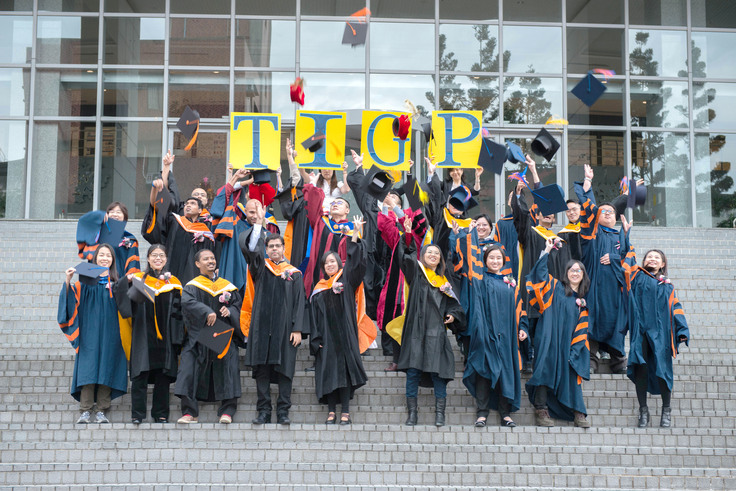
Graduated Program(TIGP).
Major Organization of Academia Sinica 
The
Convocation 
The Convocation consists so far of 213 members (academicians), which
include six Nobel laureates, namely Dr. T. D. Lee (physics, 1957), Dr. C. N. Yang
(physics, 1957), Dr. Samuel C. C. Ting (physics, 1976), Dr. Y. T. Lee (chemistry, 1986)
,Dr. Steven Chu (physics, 1997) and Dr. Daniel Chee Tsui (physics, 1998). Membership in AS is an honorary lifetime privilege,
although without remuneration. According to their own expertise, members are grouped into
three divisions: mathematics and physical sciences, life sciences, and social sciences and
humanities. A maximum number of ten new members is allocated to each of the three
divisions during the biennial Convocation are as follows:
- To elect members and honorary members.
- To elect members to the Council of Academia Sinica.
- To make policies on academic research.
- To carry out research at the government's request.
Of the 215 academicians, only 65 reside in the Republic of China. However, this situation is changing. In the past three years, President Lee has succeeded to invite many overseas academicians and outstanding scholars to return to Taiwan to help upgrade the quality of research in Taiwan.
The
Council 
The Council consists of 19 ex officio members (the President, the Vice
Presidents, and the directors of the research institutes ) and 36 elected members at the
tenure of three years. The Council's functions are as follows:
- To make and review research policies.
- To evaluate proposals concerning changes to the institutes and research projects.
- To promote academic cooperation in the Republic of China and with other countries
- To make plans for academic development when requested by the government.
- To elect a shortlist of three candidates for the presidency of Academia Sinica when the
presidency vacates. Of them one will be appointed by the President of the Republic of
China to head the academy.
- The formulation of rules as authorized the by-laws of Academia Sinica.
The
Central Advisory Committee 
The Central Advisory Committee was established on august 19, 1991. The
committee is composed of the chairpersons of the advisory committees of the individual
institutes plus two or three specialists, nominated by the president of Academia Sinica,
for each of the Academy's three divisions (Mathematics and Physical Sciences, Life
Sciences and Humanities and Social Sciences). One of the Vice President of Academia Sinica
serves as chairperson.
The tasks of the Central Advisory Committee at the moment are (1) to recruit national
and international specialists for the three divisions of the Academy; and (2) to create
long-term and interdisciplinary research plans. At the same time, the Central Advisory
Committee is also responsible for evaluation and promotion of cross-institutional
large-sacle research projects, for application and screening of postdoctoral researcher,
and for selecting winners of Academia Sinica's annual awards for outstanding publications
by junior research faculties.
The
Institutes 
At the moment, there are 24 institutes/preparatory offices in the
Academia Sinica, under three divisions, namely, division of Mathematics & Physical
Sciences, division of Life Sciences, and division of Humanities & Social Sciences:
- the division of mathematics and physical sciences,
- the division of life sciences
- the division of social sciences and humanities.
Division of Mathematics and Physical Sciences 
The division of mathematics and physical sciences includes
Division of Life Sciences 
The division of life sciences includes
Division of Social Sciences and Humanities 
The division of social sciences and humanities includes
Research
Staff 
The number of research staff of Academia Sinica at present totals 802,
with 13 distinguished research fellows, 324 research fellows, 188 associate research
fellows, 134 assistant research fellows, and 123 assistant fellows and 20 research
assistants. Over 90% of the staff above the level of assistant research fellows
(inclusive) hold a Ph.D. degree.
Budget 
Academia Sinica answers directly to the Presidential Office. Its budget
is voted upon by the Legislative Yuan. The budget of 1999 is NT$ 4506 million, an increase
of 12.84%, compared to NT$3993 million of the previous year. Of the total spending, the
research of Mathematics and Physical Sciences accounts for 21.13%, the research of Life
Sciences 21.17%, the research of Humanities and Social Sciences 20.95%, construction and
facility 16.19% and Miscellaneous 20.56%.

Recently Progress 
Under the leadership of President Yuan T. Lee and his predecessor Dr.
Ta-You Wu, Academia Sinica has made tremendous progress in recent years. More and more
research papers are accepted by internationally well-established journals. Some research
journals published by Academia Sinica, such as Zoological Studies and Statistical Sinica,
have also received international recognition.
International collaborations have also been a focus of the development of Academia
Sinica. The Institute of Astronomy and Astrophysics, for example, has recently started
construction of two 6-meter sub-mm telescopes which will be incorporated into the
Sub-Millimeter Array of Harvard-Smithsonian Astrophysical Observatory, to be built on top
of Mauna Kea, Hawaii. Upon its completion in 1998, it will be the first sub-mm array in
the world. Astronomers in Taiwan would be among the first to explore mysteries of the
universe in ways that have not been revealed before.
Academia Sinica is involved in another pioneering project. The High-Energy Experimental
Physics group of the Institute of Physics has been participating in the collider detector
experiment at Fermilab in search of "top quark." When the existence of top quark
was finally confirmed last March, R.O.C. became one of the five countries contributing to
this discovery.
Still another pioneering project, conducted by the Institute of Information Science, is
typically Chinese: the Chinese Information Processing Project, which initiated research in
Chinese language engineering related research such as a dictation system, called the
"Golden Mandarin III," for automatic conversion of Chinese phonetic symbols (fed
into the computer by using fluent, continuous Mandarin voice) into corresponding
characters.
Researchers in the division of life sciences at Academia Sinica have demonstrated their
expertise with distinction in biology and biotechnology. Moreover, the results of their
basic research have often had immediate practical application for the well-being of people
and other creatures on earth. For example, the Cancer Research Division of the Institute
of Biomedical Sciences seeks to develop anti-cancer drugs, immunodrugs, vaccines, and new
biophysical technology for analyzing genes and genotoxic effects of heavy metals.
Institutes of Botany and of Zoology are in the process of establishing local databases, in
close cooperation with global environmental institutions. These databases will be useful
in resource exploitation, environmental impact evaluation, ecological conservation, as
well as public education. As a result of efforts by zoologists at Academia Sinica, Lanyu
scops owl (Otus elegans botelensis), a rare species found only on Orchid Island, south
east of Taiwan, is now considered vulnerable rather than endangered.
Academia Sinica also plays a leading role in many fields in social sciences and
humanities. The archaeological findings by researchers at the Institute of History and
Philology have, in combination with traditional documents, led to a virtual rewriting of
ancient Chinese history, pushing back the span of Chinese history by many centuries. The
Institute of Ethnology looks into the cultures of various ethnic groups; its comparative
studies of aboriginal peoples, particularly in Taiwan, Southeast Asia, and the Pacific,
have made it a unique center for anthropological research in Asia.
Future 
As the 21st century draws near, Academia Sinica is preparing itself for
new challenges in pursuit of excellence. Special emphasis will be placed on large- scale
interdisciplinary projects. And greater efforts will be made to provide better facilities
and environment, to enhance the quality of basic research, to promote exchange with
research institutions abroad, and to meet, and even surpass, international academic
standards.